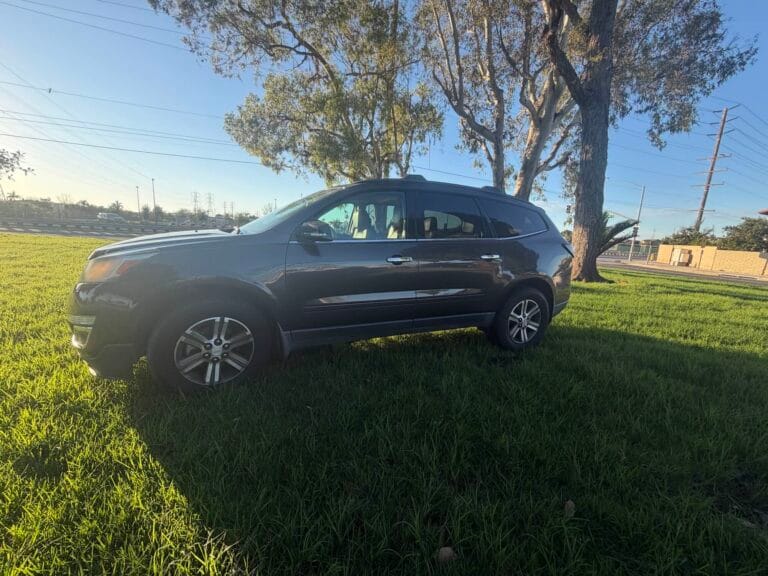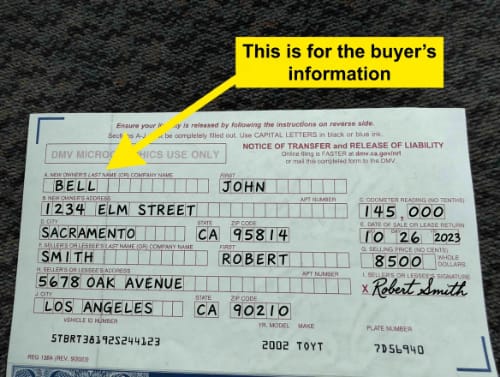


Hello, Sonny Miller here in Southern California. I wanted to help you guys with something on how to buy a used vehicle — the things I look for after over 20 years of experience buying vehicles here in Southern California. So I wanted to help out and share what to look for when buying a used vehicle.
If you guys need help or any advice on purchasing a used vehicle or navigating your way through the process, call me anytime at (714) 900-3723. I answer my phone personally. I’m here to help.
Where to Look for a Used Vehicle
If you’re buying a used vehicle depending on your budget, you’re more than likely going to be looking on Facebook Marketplace, Craigslist, or OfferUp. So depending on the vehicle you’re trying to get for your need, you’re going to want to find the best vehicle possible for the lowest price. You might have to do some searching, so try to find the best deal possible.
I always suggest going with something like a Honda or Toyota, especially if it’s your first vehicle, because these can go for hundreds of thousands of miles and last a long time.
But when you find the vehicle you have an idea to go look at or purchase, you’re going to want to do some things beforehand that are smart. You don’t want to just go in there and purchase the first vehicle you see. So let me go over some things you’re going to want before you head out to look at it.
Your Pre-Purchase Checklist: Two Tools You Need
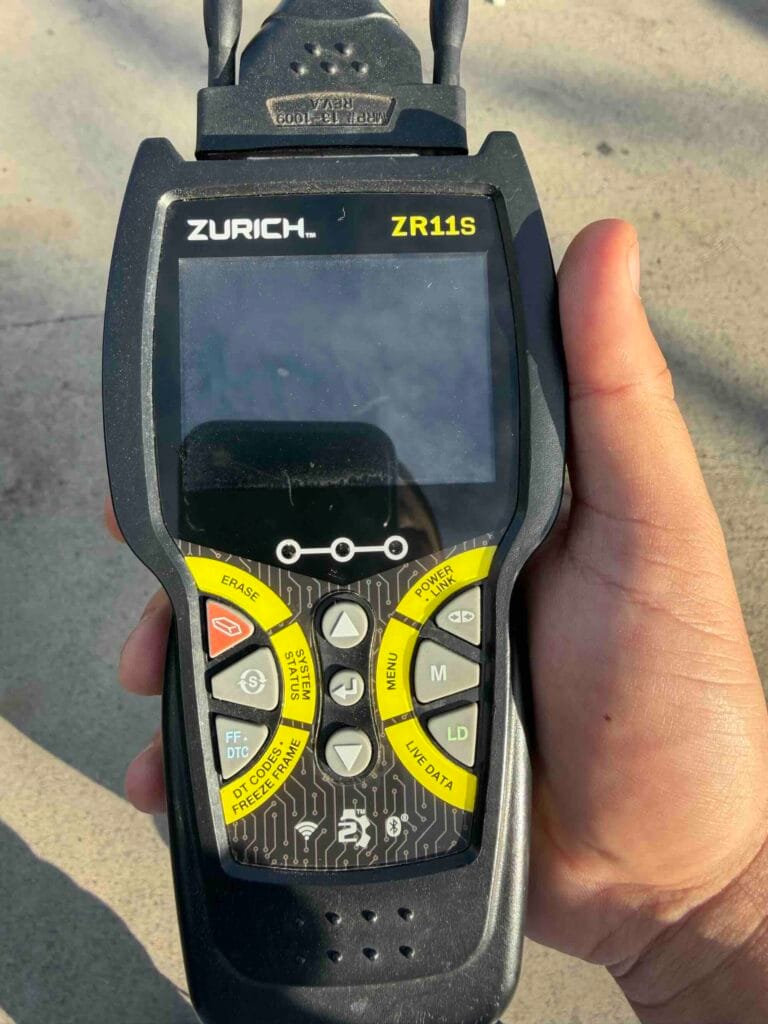
1. An OBD2 Scanner
One of the things you want is an OBD2 scanner, which is an onboard diagnostics scanner, second generation. You can buy them for like $30 to $40 at Walmart or AutoZone. You don’t need the best capable one. You don’t need anything fancy for $400 to $500, or some of them go for thousands of dollars. You don’t need that for this scenario. You don’t have to be a mechanic or super smart or a genius to understand what this machine does.
The reason you want to bring this on your used vehicle adventure is because you’re going to want to scan the vehicle either way, even if there’s a check engine light on or not. Whatever vehicle you go to look at, you want to scan it whether there are any lights on the dashboard or not. Because sometimes there are stored codes and you don’t want to get manipulated.

Why This Prevents Getting Duped
I don’t want to say like someone shut the code off, but you don’t want to get duped or tricked either, because people do these practices. They’re unethical, but it happens every day. Somebody might know that the check engine light is on for something serious, and you go buy this used vehicle, and now a day later, three days later, 20 miles later, 50 miles later, or 100 miles later, you have this check engine light that you didn’t even know was a problem and a headache.
I wish people would be more transparent about it, but sometimes they’re not. So this helps you. It helps you not get duped or scammed. I’ll just say it bluntly — this prevents that, or at least helps with it.
If you want to see exactly what an OBD2 scanner looks like and how the codes work, I broke it down in detail in my guide on how to sell a car that failed the smog test — same scanner, same codes, just from the seller’s side.
Check the I/M Readiness on the Scanner
There’s one more thing to check on the scanner — the I/M Readiness section. After you plug in the scanner, go to the option that says “I/M Readiness.”
If it says “Ready” and there are no codes, that’s a good sign — go ahead and proceed.
But if it says “Not Ready,” that’s a red flag. It means they just erased the codes, or they reset the battery — they took the terminals off the battery and reset the brain of the vehicle. The scanner won’t read what was wrong because everything got wiped.
If this happens, ask the seller: “Did you just reset the battery?” If they replaced the battery, that makes sense — but you have to drive that vehicle extra, even 40 to 50 miles, because the readiness monitors have to cycle now. So make sure you really drive it before you make any decisions.
Here’s a key thing to know about newer vehicles: on 2010 and newer vehicles, there are permanent codes the vehicle stores that cannot be erased by disconnecting the battery. The only way to erase a permanent code is to actually fix the problem. So if you’re looking at a 2010 or newer vehicle and the scanner shows nothing, you’re getting a more honest read.
But if the vehicle is under 2010, there’s a trick sellers can do — they reset the battery and the OBD2 scanner won’t read the codes. That’s why always checking for stored codes AND I/M readiness is so important. Test driving is crucial here. Always maximize the test drive.
2. A Carfax or VIN Audit Report
I should have started with this first. You want to get a Carfax. You want to sign up for Carfax or VIN Audit depending on your budget. Carfax I think is like $100 for 4 to 6 Carfax reports.
So you want to run a Carfax on the vehicle, preferably before you even go there. I’m noticing on Facebook Marketplace they give the option for the VIN number now, which is pretty cool. It gives you the option to put that in. So if you have the VIN number, or if you have the license plate number depending on the year of the vehicle, you can run the Carfax on it.
What the Carfax is going to do is show the vehicle’s history — if it’s been in any accidents, or if the miles have been flipped back. What that means is the person knowingly or unknowingly knows this, because sometimes the person selling the vehicle doesn’t even know the miles have been turned back. The miles were manipulated. So if it says 80,000 miles but it really has 280,000 miles, but at some point somebody illegally turned the miles back on purpose — this happens. I’m trying to help you guys prevent getting duped or scammed and help you purchase a good running vehicle.
What to Inspect Before the Test Drive
So after you have your pre-checklist — the Carfax and the onboard diagnostics — now you want to find a vehicle in your budget. When you get to the vehicle, you don’t just want to test drive it. Some things are things you have to hear and feel, and I can’t put all of that into words. But here’s what I do, and what I suggest anybody to do.

Pop the Hood and Check the Oil
The first thing I do is, before you even start the vehicle, pop the hood and check the oil. This is going to show you and reveal a lot about this vehicle. They say the oil is the lifeblood of the vehicle, which is true.
So if the oil looks funny to you in any way — if it’s real thick, or if it looks like a milkshake consistency coming off the oil stick — do not purchase this vehicle. There’s something wrong with it. There’s a very strong chance of this vehicle having a head gasket problem, which will cost you thousands of dollars. You just saved yourself thousands of dollars and a headache. I mean, if you can afford that, sure. But that’s not what you signed up for — you’re trying to buy a vehicle on a budget.
Also check if it’s low on oil, or if it’s at just the right amount on the stick.
Check the Oil Change Sticker on the Windshield
Quick note — check on the top left of the windshield to see when the last oil change was. If the sticker is missing, ask the seller when was the last time the oil was changed, and if they have a record of it.
If there’s a sticker on the top left of the windshield and the oil change is recent, that’s a very good sign. That means the seller treated this vehicle good. But if there’s no sticker on there and no service record of the oil change, that tells you something else about the seller and how this vehicle was treated.
Start the Vehicle and Check the Transmission Fluid
Next thing — put the oil stick back, start the vehicle, and check the transmission fluid stick if you can. Most vehicles you can, but on some vehicles it’s not possible unless you have a mechanic with you and you lift up the vehicle.
The transmission stick is sometimes in weird spots, but try to find it. It usually will show an image on the stick with a transmission-looking thing on it, or the end of the dipstick is usually red.
While the vehicle is started, look at the transmission fluid. Is it low on transmission fluid? That’s a problem because it needs transmission fluid. Is it leaking transmission fluid? These are things you have to take into account. You want to see if it’s low or if it’s right where it’s supposed to be — there will be a leveler stick indicator showing how full, low, or empty the transmission fluid is.
Plug In the OBD2 Scanner Before AND After the Test Drive
Before you test drive the vehicle, put the OBD2 scanner on it. You can Google how to use it — you just plug it in and it will run the test and see if there are any stored check engine lights or any problems with the vehicle.
Even if someone shut off the vehicle, or if someone reset the battery and reset the check engine light on purpose, this doesn’t matter. The scanner will tell you that there’s a problem with the vehicle.
If there are codes on there that are minor, address it with the seller. Tell them, “There are some codes on here, I’m aware of it, I’ll still work with you, but I have to take that into consideration in my offer.” But if there are major problems, walk away.
And another thing that’s a walk-away — if they are not allowing you to plug in the onboard diagnostic. If they say “I don’t want that in my car,” or they’re reluctant to let you do this, this is a serious sign and a problem. Walk away. Don’t do the deal. I highly suggest you do not do that deal, because they’re hiding something.
Plug the OBD2 scanner in before the test drive and after the test drive. Check the codes both times.
Look Underneath the Vehicle
Also check beforehand to look underneath where the vehicle is parked. If there are any oil leaks, or any leaks at all — because if a vehicle has been parked for two to three days and there is an oil leak, you will see it. These are all telltale signs you have to look for. And sometimes the person selling the vehicle doesn’t even know these things.
Ask for Service Records on Claimed Repairs
If the seller is claiming anything significant about the vehicle — like a new engine, a new transmission, a timing belt replaced 5,000 miles ago, or anything like that — ask for service records.
A new engine or a new transmission is pretty extreme. If they’re claiming this, the records should exist. Same thing if they’re claiming a timing belt — that’s a major service most people keep paperwork on.
If they can’t show you any paperwork or receipts for what they’re claiming, take that into account. The claim might be true and they might just be bad at keeping records — but it also might not be true at all. Either way, you should know which one you’re dealing with before you hand over money.

The Test Drive: Do It Right
When you go inside the vehicle, after everything checks out, you want to test drive it. You want to feel the transmission and try to get the vehicle up to speed. But always try this — don’t just go around the corner. Don’t go one block or around the corner and then come right back. No. You’re about to give this person money for this vehicle. Take the time and really test drive this vehicle.
Drive at Least 10 to 15 Miles, Including the Freeway
Test drive the vehicle for as long as possible — 15, even 20 minutes. And I always suggest driving the vehicle on the freeway. Go to your closest freeway and drive the vehicle for at least 5 to 10 miles.
This reveals a lot about the vehicle you’re about to spend thousands of dollars on. If the vehicle is overheating, the freeway will reveal that to you. You do not want to buy an overheating vehicle, especially when you’re not mechanically inclined.
Even if the seller complains about the gas price or that you’re wasting gas, that’s fine. Offer to pump gas in it yourself — “I’ll pay for the gas.” You’re about to spend money on this vehicle and you want to make sure it’s running correctly.
What to Feel For During the Drive
At a stop sign or red light: Try to feel any vibrations at all. If the door is vibrating, or if the window is vibrating, these are signs of motor mounts that are wearing. You’ve got to feel these vibrations.
Getting up to speed: You’ve got to feel the transmission. First gear will be around 0 to about 20 miles an hour. If there’s a hesitation going from 20 miles an hour to around 30 to 40 miles an hour, or if the transmission is slipping, you have to feel these things. It’s more of a feel than something I can put in words. You have to drive and feel the vehicle, how it drives and goes.
Read the Seller, Not Just the Vehicle
Do not purchase a vehicle if someone is telling you, “No, I cannot go on the freeway, I don’t have time for a test drive, I have to go,” or if they’re real anxious and pushy. You can tell a lot from the seller. You have to read people too.
If the seller is real pushy and anxious about test driving the vehicle, that’s a telltale sign. If they’re telling you, “Oh, I gotta go to work, I gotta be home, can we go back, no we can’t go on the freeway” — if there’s any hesitation at all, don’t buy that vehicle. I’ll tell you that now. Why are you not allowing me to properly test drive the vehicle? That’s a problem. That’s a major sign.
Basically, a lot of this is signs. You’ve got to look for the signs of what’s going on with the vehicle.
Bringing a Mechanic With You (Optional)
If you’re not mechanically inclined, a lot of mechanics will come with you to look at and inspect a vehicle for a price. Some people like this idea, some people don’t. That’s up to you guys. But I’m just letting you know — mechanics do offer this service.
If you have a mechanic you know who’s willing to offer this, even better. But if you need a random mechanic, you can hunt around, Google around, and ask if they’re willing to do this. It’s a service mechanics offer for a price. The price just depends.
If you follow these steps I’m giving you, you don’t really need to bring a mechanic with you. But if you want to, that’s fine. These steps help either way.
Check the Title Before You Buy
Always make sure to look at the title. Here in California, when you look at the title, look at the top right corner:
- Empty red box = clean title
- The word “salvage” inside the red box = salvaged title
People try to sell vehicles that are salvaged and they don’t tell you they’re salvaged. What you can do to protect yourself is call up a registration place, AAA if you’re a member, or go to the DMV and run a history report with them beforehand.
If you’re buying a salvage vehicle, that’s okay too — as long as they’re disclosing it’s a salvage. I wrote a full guide on what to know about salvage title vehicles in California if you want to understand what you’re getting into.

Make Sure the Vehicle Has Passed Smog
If the vehicle is pre-1975, it does not require to be smogged — it’s smog exempt. But for everything else, this is California law. This is in California Vehicle Code §24007.
The seller is the one legally responsible to smog the vehicle, not you as the buyer. So if a seller is trying to sell a vehicle without a current smog certificate, they are not following the law. You do not want to end up with a headache.
When a vehicle passes smog, the seller gets a certificate — a piece of paper that’s good for 90 days. Do not buy a used vehicle without this certificate in the seller’s hand.
People do this on purpose sometimes — they know the vehicle won’t pass smog, so they try to sell it to you without doing the test. You have to be the one to be aware of this. If a seller doesn’t have a current smog certificate, walk away. You might be buying a vehicle that cannot pass smog, and now you have to put thousands of dollars into a vehicle just to drive it legally in California. That’s not what you signed up for.
Check the Registration and Back Fees
Another thing to take into account: registration back fees. Here in California, each year you have to pay a fee. Try to buy a vehicle where the registration is current and the smog is passed with the smog certificate available in the seller’s hand. This makes your purchasing much smoother.
That way you can just go to the DMV or a registration place, transfer the vehicle into your name, pay the fees, and now you own the vehicle.
Match the Seller’s ID to the Title
Match the ID of the person selling the vehicle with the name on the title. If it doesn’t match, that can be a problem.
Check for Stolen Vehicles
If you feel anything is off or fishy, you can always call up your local police department. They are happy to answer your phone call. Don’t call 911 — call up the non-emergency line. They have vehicle records departments.
Talk to the operator on the non-emergency line and give them the license plate of the vehicle. They’ll tell you if there’s a stolen report on it or not. This is a good tip for anybody buying a used vehicle.
You do not want to buy a stolen vehicle, because now you’re out the money and you’re not going to get that money back if you purchase a stolen vehicle. This happens all the time.

Close the Deal at the DMV, AAA, or a Registration Office
Don’t just buy a vehicle off the street and drive off. I always prefer people to go to the DMV, AAA office, or registration place when they’re purchasing their vehicle.
When you’re purchasing a vehicle, go to one of these places and it will give you the full history. You can ask the person at the counter — DMV, registration service, or AAA — any questions you want. “Hey, is this vehicle salvage? Is this title clean?” They will reveal everything to you at these offices when you’re transferring the vehicle into your name.
If you’re buying a vehicle without a title, that’s a legal process too — you’ll need Form REG 227, which is the DMV’s Application for Duplicate or Transfer of Title. I wrote a full walkthrough on that one because most people get it wrong on the first try.
Never Exchange Money Until the Deal Is Done
This is one of the most important rules: never exchange money until the deal is done at a AAA office, DMV, or registration service. Make sure the vehicle is in your name. This safeguards you from any surprises.
Also, please know that when you are buying from a private party, they are not obligated to give your money back. This is why these steps are so serious and severe to take. If something goes wrong, you’ll have to go to civil court — and that costs you more money.
California law: private party sales are as-is. There is no cooling-off period. There is no two-day right to cancel. There is no three-day right to cancel. It’s not like buying from a dealership. (You can read more about California’s cooling-off rules on the DMV’s Car Buyer’s Bill of Rights page.)
Some of these steps also apply when you’re buying from a dealership — don’t be afraid to ask for a Carfax. A dealership should be giving you this automatically. But this blog is for a private party purchase in California.
Use Logic on the Price
Always take the price into account. If the vehicle is way underpriced and the deal seems too good to be true, then it’s not true. You have to use logic when you’re buying a used vehicle and make sure not to get financially duped.
If you navigate it right, you will find a deal. I hope you guys the best on purchasing your used vehicle.
Need Help? Just Call Me
If you guys need any help or advice on purchasing a used vehicle, or navigating your way through, or any pointers I can give you personally — call me up anytime at (714) 900-3723.
I’m happy to help. I answer my phone personally. You can call me or text me anytime. I’d be happy to help. It’s not a problem, and I’m here to help everybody.
I’m Sonny Miller here in Southern California, trying to help you guys. Thank you and have a good day.