

You got in an accident. The insurance company took your title, paid you out, and now you’re sitting there with a car that technically doesn’t have a title anymore. You can’t sell it. You can’t register it. And the process to get a salvage title back in your name is a lot more complicated than most people realize.
I deal with this exact scenario all the time. My name is Sonny Miller — I’ve been in the car business for over 20 years and I buy cars with salvage titles across Southern California. The difference is, when you sell to me, you skip every single step I’m about to describe. I take the car as-is and handle the entire process myself. Call me at (714) 900-3723 if you want to skip ahead — or keep reading so you understand exactly what’s involved.
Watch: How GoCarBuyer Works
What Actually Has to Happen Before You Get a Salvage Title
Most people hear “salvage title” and think it’s just a label. It’s not. Once the insurance company declares your car a total loss, the DMV requires you to go through a full process to reclaim ownership — and it’s not cheap or fast. Here’s what’s involved, step by step.
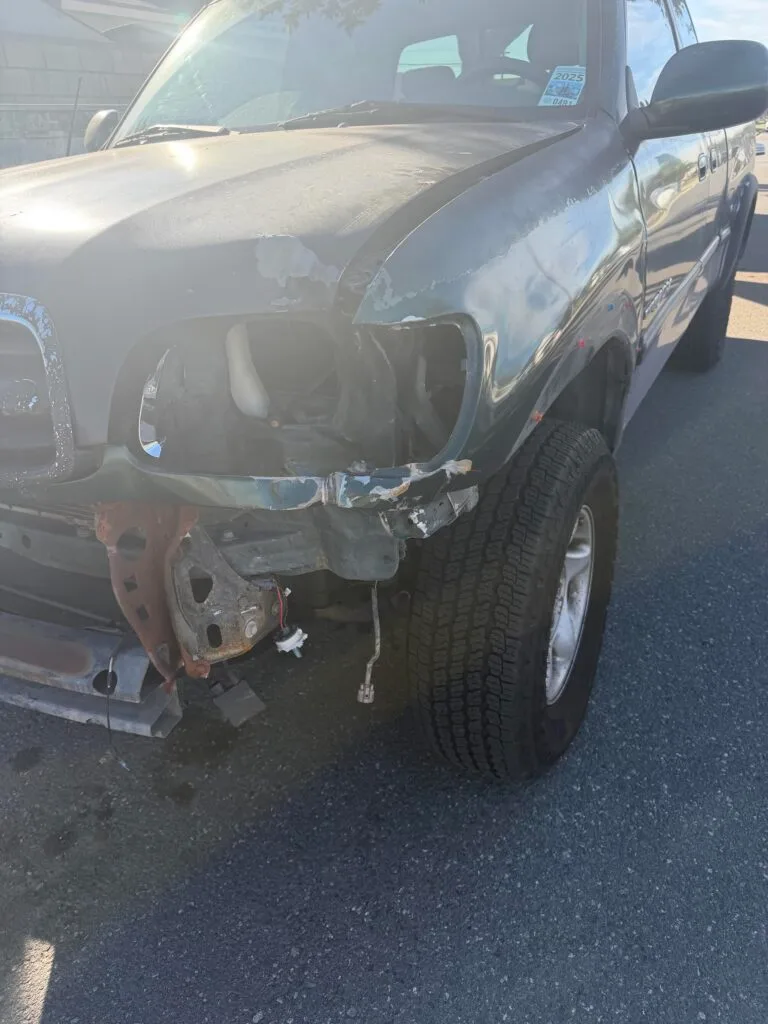
Step 1 — Get the Car Repaired First
Before anything else, the vehicle has to be in operating shape. If something’s rubbing against a tire, if a taillight is busted from the accident, if the bumper cover is missing — you’re going to fail the inspections that come next. I’ve seen guys show up to the brake and light inspection without a bumper cover and get turned away immediately. The car has to look like it’s roadworthy before anyone will even start the process.
The cost of repairs depends entirely on the accident. It could be $0 if the car is already fixed, or it could be thousands if there’s still body damage, a blown sensor, or something structural. This is the part most people don’t budget for.
Step 2 — Brake and Light Inspection (~$200)
This is the first official inspection, and the name is misleading. It’s not just “are your headlights working and brake lights on.” The technician pulls all four wheels off your car and inspects the brake rotors, calipers, and pads. If they don’t meet the standard, you fail. You’ll have to get the brakes replaced and come back — and pay again.
The inspection costs about $200 on average and takes 1 to 2 hours. The hard part is finding a place that does it — not every shop is certified for brake and light inspections, and appointments can be hard to get. Plan ahead on this one.
Step 3 — Smog Check (~$60-70)
After the brake and light inspection, you need an up-to-date smog check. If the accident triggered a check engine light — which happens a lot — you won’t pass until it’s fixed. That’s more money and more time, and it’s exactly the kind of hassle I take off your plate when you sell to me.
There’s also a visual component to the smog check that most people don’t know about. If the technician sees something under the hood that doesn’t look right — missing parts, damaged emissions equipment — they can fail you on the visual alone, even if the car runs fine. So the car needs to be in decent shape before you even pull into the smog station.
Step 4 — Pay All Registration Fees Up to Date
Before the DMV will issue a salvage title in your name, all registration fees have to be paid up to date. If your tags have been expired for 2 or 3 years, you’re looking at hundreds — sometimes over $1,000 — in back fees. And you can’t skip this step or work around it.
Step 5 — VIN Verification at the DMV
Once everything else is done, you take the car to a California DMV location for a VIN verification. A DMV employee comes out, checks that the vehicle identification number matches across all the locations on the car — the dashboard, the door jamb, the engine — and confirms it matches the paperwork. This is to make sure nobody tampered with the VIN or swapped parts from another car.
Some DMV locations have a specific area where you pull up and they handle it fairly quickly. But you need all your previous paperwork — brake and light certificate, smog certificate, registration receipt — with you when you go. After the VIN verification, the DMV will issue you new plates. You can’t keep the old ones. The car is getting completely rebranded.
What a Salvage Title Does to Your Car’s Value
Here’s the part nobody wants to hear. A salvage title drops your car’s value significantly — roughly 40% or more compared to the same car with a clean title. If your car would normally be worth $10,000, expect about $3,500 with a salvage title. And that’s in a private party sale where you still have to find a buyer who’s okay knowing the car was in an accident and went through the salvage process.
That means after spending hundreds on repairs, brake and light inspection, smog, registration fees, VIN verification, and new plates — you’re selling the car for significantly less than it was worth before the accident. For a lot of people, the math just doesn’t work out.
Clean Title vs. Salvage Title — What the Words Mean
These terms get confused all the time, so let me break them down simply.
A clean title means the vehicle has no reported accidents or total loss claims through insurance that the DMV knows about. It’s possible for a car to have been in an accident and still have a clean title if the owner paid for repairs out of pocket and never reported it through insurance.
A salvage title means an insurance company declared the vehicle a total loss after an accident. In California, you’ll see the word “SALVAGED” in a red box on the top right corner of the title. If you’re buying a car and the title doesn’t say that, the title is clean.
A clear title is different from a clean title — clear means there are no bank liens on the vehicle. Nobody still owes money on it. A car can have a clean title but not a clear title if there’s still a loan on it.
How to Check If a Car Has a Salvage Title
If you’re buying a car and the seller doesn’t have the title in hand, you need to verify the title status before handing over any money. Here are your options.
Check the most current registration. If the registration shows the car as clean and was issued within the current year, that’s a good indicator. But it’s not a guarantee — the accident could have happened after the registration was issued.
Use a third-party DMV service. Places like Oscar’s Multi-Service or other licensed DMV agents can run a current check on the car’s title status for about $20 to $40. They’ll tell you if it’s salvage, if there’s a lien, and who the registered owner is.
Run a Carfax. It costs about $50, but it’ll show you if the vehicle has been reported as salvage or rebuilt. In California we use the term salvage — Carfax might label it as “rebuilt” depending on how they word it.
Call the non-emergency police line. Before you buy any car from a private party, I suggest calling your local police station’s non-emergency number. Give them the license plate and they can tell you if the car has been reported stolen. This takes 5 minutes and can save you from a nightmare.
Don’t Want to Deal With Any of This? Call Me.
Everything I just described — the repairs, the brake and light inspection, the smog check, the registration fees, the VIN verification, the DMV trip, the new plates — I take all of that off your hands. When you sell your salvage title car to GoCarBuyer, you don’t need to go through any of those steps. I buy the car as-is, in whatever condition it’s in, and I handle the entire process myself.
I’ll come to you anywhere in Southern California — Los Angeles, Orange County, Riverside, San Bernardino, San Diego, Ventura. 7 days a week, even 9 PM on a Saturday. I bring the paperwork. You get paid the same day — cash, check, Zelle, whatever works. You don’t have the title? That’s fine, I handle it. Your registration is expired? Doesn’t matter.
The time you’d spend going through the salvage title process — the appointments, the fees, the DMV lines — that’s time and money you’re never getting back. And at the end of it, the car is still worth 40% less than it was. For a lot of people, selling it to me as-is and walking away with cash the same day makes a lot more sense.
Frequently Asked Questions About Salvage Titles
Can I sell my car without going through the salvage title process?
Not legally to a private buyer — selling a car with a clean title when the insurance company has already declared it a total loss is fraud. But you can sell it to me as-is. I handle the salvage process on my end so you don’t have to.
How much does the whole salvage title process cost?
At minimum, you’re looking at about $200 for the brake and light inspection and $60-70 for the smog check, plus whatever your registration fees are. If the car needs repairs to pass inspection, that could add hundreds or thousands more. Every situation is different.
How much does a salvage title reduce my car’s value?
Roughly 40% or more compared to the same car with a clean title. A car worth $10,000 clean might bring about $3,500 with a salvage title in a private sale.
What’s the difference between a clean title and a clear title?
Clean means no reported total loss or salvage history. Clear means no bank liens — nobody still owes money on the car. A car can be clean but not clear, or clear but not clean.
What if I don’t have the title at all?
I buy cars without titles all the time. I bring the proper paperwork to handle it on the spot. It’s not a problem.
Do you buy cars that are still damaged from the accident?
Yes. I buy salvage title cars in any condition — damaged, partially repaired, fully repaired, or untouched since the accident. Call me and describe what you’ve got.
Ready to Skip the Headache?
Call me and tell me what happened — the year, the model, what kind of damage, and where things stand with the title. I’ll give you a straight answer on what it’s worth and we can usually get it done the same day. Save the DMV trips. No inspections. No waiting.
I am not a corporate robot. See what other sellers say on our customer reviews page.
Sonny Miller — (714) 900-3723
GoCarBuyer.com
Cypress Office: 10601 Walker St Suite 102, Cypress, CA 90630
Van Nuys Office: 6360 Van Nuys Blvd #16, Van Nuys, CA 91401
Open 8 AM – 8 PM, 7 Days a Week — Find Us on Google Maps


