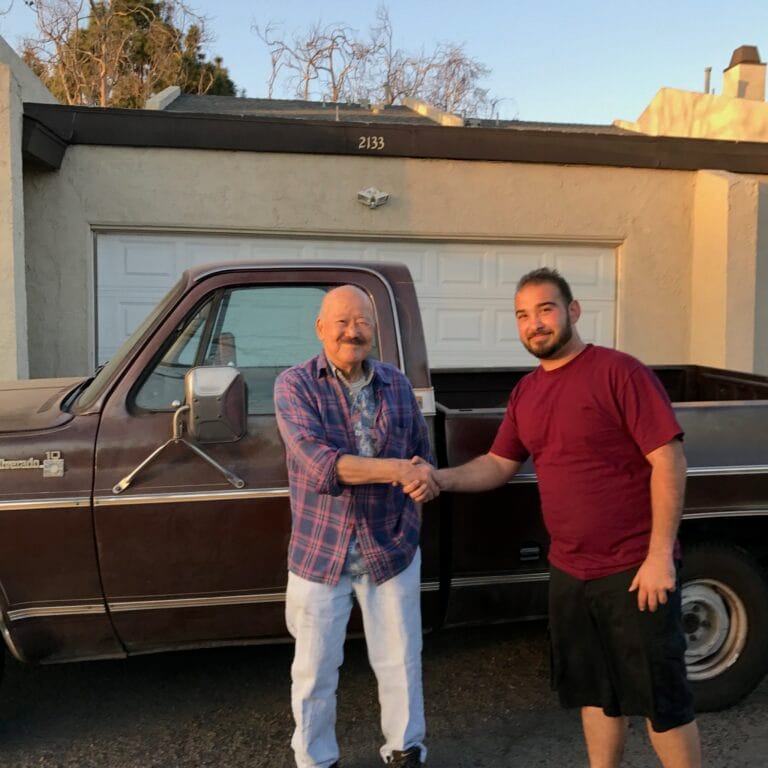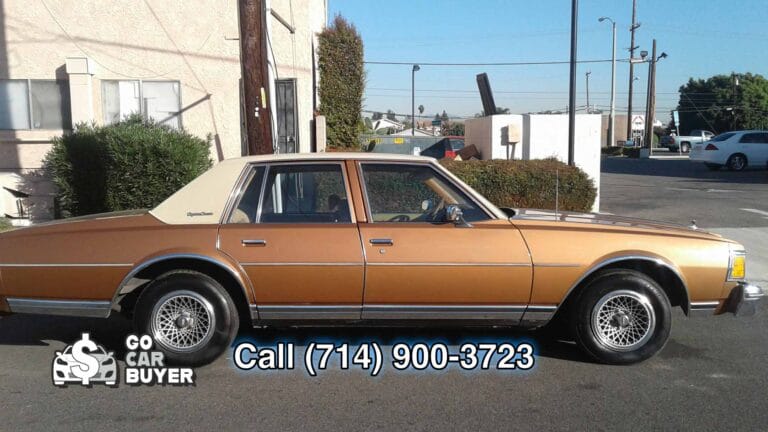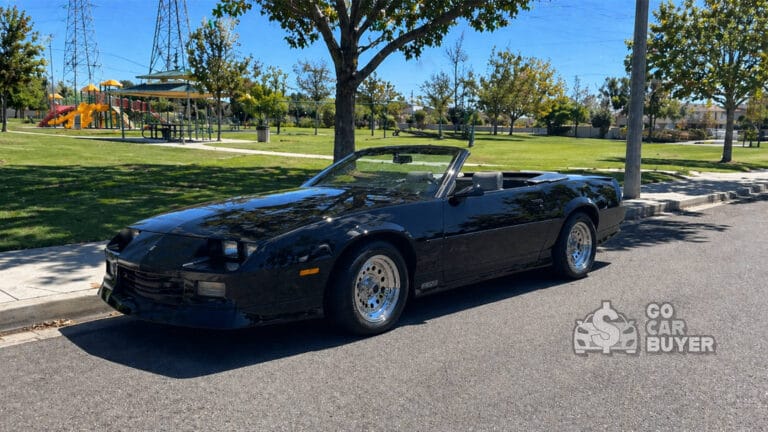


Hey, it’s Sonny. I’ve bought a lot of classics over 20 plus years in Southern California, but nothing turns my head like an Impala. From Whittier Boulevard to the San Fernando Valley, this car isn’t just a Chevy around here, it’s family history. So if there’s one sitting in your driveway, your garage, or your uncle’s side yard in Fontana, I want to hear about it. Original, restored, project, or full lowrider build, call me at (714) 900-3723 and let’s talk about your car. I answer personally. I’m not a corporate robot.
The Impalas I’m looking for
A quick ride through the Impala story
1958: the one that started it
The first Impala arrived for 1958 as the top-of-the-line Bel Air, built while Chevrolet was celebrating 50 years of making cars. It gave Chevy its first dual headlamps and the triple taillights that became the model’s signature for decades. Buyers loved it enough to help push Chevrolet back to the number one production spot during a recession year, which tells you everything about how this car landed.
1959 to 1964: fins, the SS, and the 409
For 1959, the Impala became its own series and went wild doing it, with batwing fins shooting outward over cat-eye taillights. Then 1961 changed the game twice in one year. The Super Sport package showed up with real suspension and brake upgrades, and the 409 V8 landed mid-year underneath it. Only about 450 SS Impalas left the factory that first year, actually 453 if you want the exact number, and just 142 of them carried the 409. The Beach Boys wrote a whole song about that engine, so the legend took care of itself. By 1964, the body had cleaned up into the shape everybody on Earth recognizes.
1965 to 1970: the sales king
The 1965 redesign traded the old X-frame for a full perimeter frame with coil suspension, and America answered by buying more than a million Impalas that year alone, an industry record for annual sales. These are the fastback years too, and the SS 427 cars from 1967 to 1969 sit at the top of the pile for collectors. Also worth knowing: the Caprice started life in 1965 as a fancy Impala trim before it became its own car.
1971 to 1976: the big-bodies
The seventies Impalas stretched out to near-Cadillac size, and for years nobody wanted them. Not anymore. The custom crowd hunts these coupes hard now, especially the hardtops, since Chevy dropped the pillarless Sport Coupe after 1975. If you’ve got one parked because it drinks gas, you guys might be sitting on the most wanted body style on the boulevard.
1994 to 1996: the modern classic
After 25 years away, the Impala SS came back as a 5.7 liter LT1 V8 sedan built off the Caprice, the one everybody pictures in black. Clean examples get harder to find every single year, because most of them got driven exactly the way Chevy intended.
The ’64 and the lowrider legacy
Let’s talk about the thing that makes Impalas different here. No car means more to Southern California lowriding than the Impala, and the ’64 sits at the center of that whole culture. I’ve stood next to builds with deep, deep candy paint that took a decade of weekends, and I’ve bought bone-stock survivors from the same block. Because I’m a SoCal resident just like you, I get what these cars mean out here, and that shows in how I treat them. Hydraulics, wire wheels, custom interior, murals, none of it scares me off. Bring me the wild ones and the plain ones both.

Condition doesn’t scare me either
Here’s where I’m different from the flippers blowing up your phone. A running, driving Impala is great, but I buy the other kind constantly. Cars that sat 20 years under a cover. Cars with rust in the quarters, no engine, or a glovebox full of loose parts. Even cars where the paperwork walked away sometime in the nineties, because I buy cars without titles and handle that form myself. So before you let a stranger from a marketplace app pick your car apart, get a real opinion from somebody who actually wants it.
When your Impala is worth more somewhere else
Now the honest part, because I’d rather lose a deal than mislead you. If you’re holding a documented 409 car or a numbers-matching SS 427 with the paperwork to prove it, a collector auction might beat any local offer, mine included. I’ll tell you that to your face, and I’ll still help you figure out the paperwork either way. Most Impalas aren’t that car, though. Most are good, honest cars that deserve a fair offer and a buyer who shows up when he says he will. That’s the lane I live in.

How selling your Impala to me works
- Call or text (714) 900-3723 with a few photos, the year, and whatever you know about the car.
- I’ll give you a number on the phone, not a runaround.
- I come to the car anywhere in Southern California, from East LA to San Diego.
- I handle the paperwork on the spot, including the DMV side, and my guide on how to fill out a California title shows exactly what you’d sign.
- You get paid before I leave, and the car can be gone the same day if you want it gone.
Impala questions I get All The time
Ready when you are
Every Impala I buy joins the gallery of cars we’ve bought, right next to the classic Pontiacs and everything else SoCal has trusted me with. So whether yours is a batwing ’59, a ’64 that cruised Whittier back in the day, or a big-body that hasn’t moved since gas was cheap, I want the call. Cypress office: (714) 900-3723. Van Nuys office: (818) 405-8808. Seven days a week, 8 AM to 8 PM, and I come to you. You’ll get a fair offer or an honest pointer somewhere better, whichever your car deserves.