Sell My Classic Car in Southern California — Get Offer Now

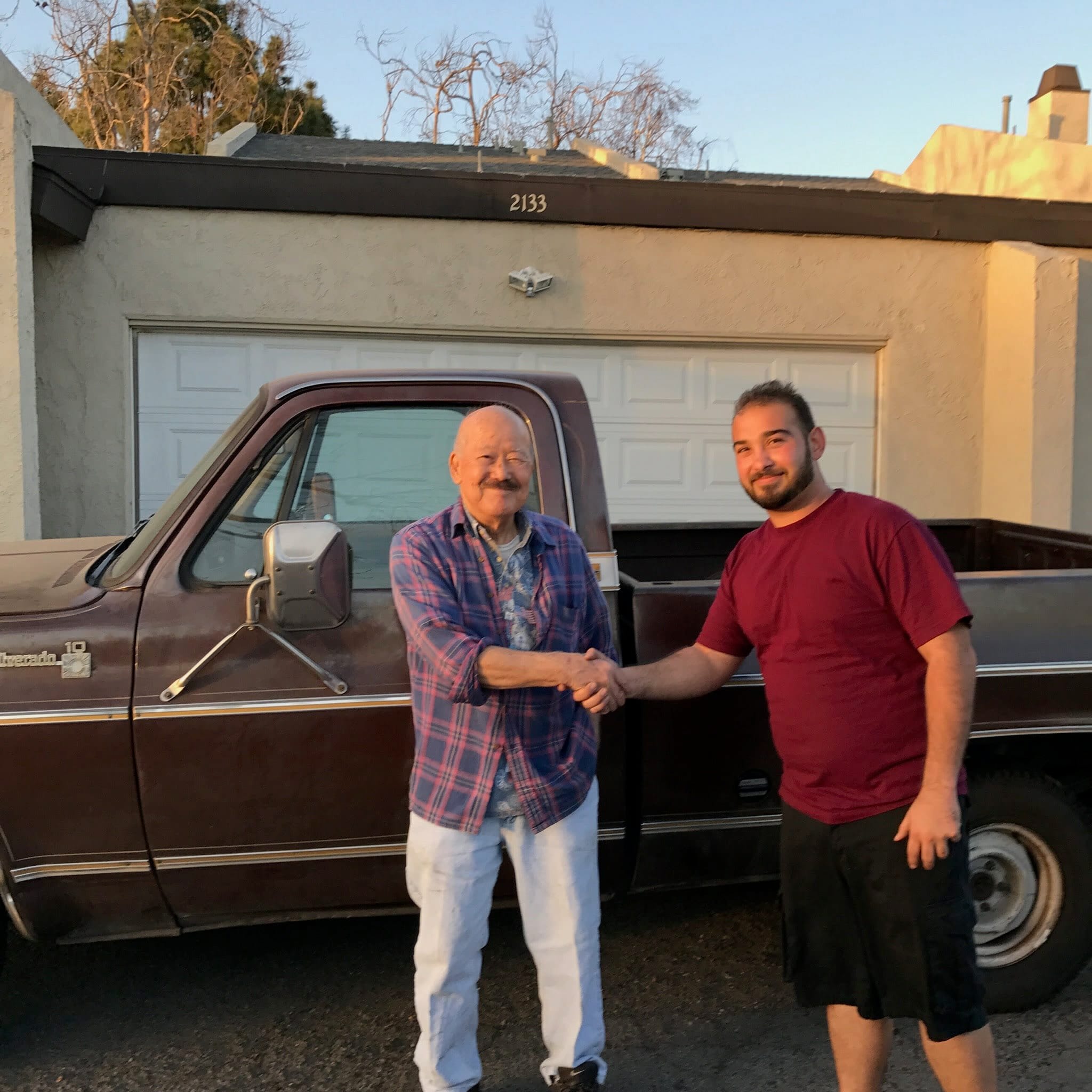
Sonny Miller from GoCarBuyer inspecting a classic Chevy truck for purchase in Southern California.
share post ⟶

If you’ve got a classic car sitting in your garage, your driveway, or in storage somewhere in Southern California, I want to buy it. My name is Sonny Miller — I’ve been in the car business for over 20 years, and classic cars are some of my favorite deals to make. Running, not running, barn find, project car, show car — doesn’t matter. I buy them all. Give me a call for a free quote — (714) 900-3723. I answer personally. If you want to learn more about what your classic car might be worth and how to get the most out of selling it, keep reading.

Watch: How GoCarBuyer Works

What Classic Cars Does GoCarBuyer Purchase?

I buy classic cars from every decade — ’40s, ’50s, ’60s, ’70s, ’80s, and early ’90s. American muscle, European sports cars, luxury cruisers, classic trucks. If it’s a classic and you want to sell it in Southern California, I’m interested. Here’s a breakdown of the types of vehicles I purchase regularly.

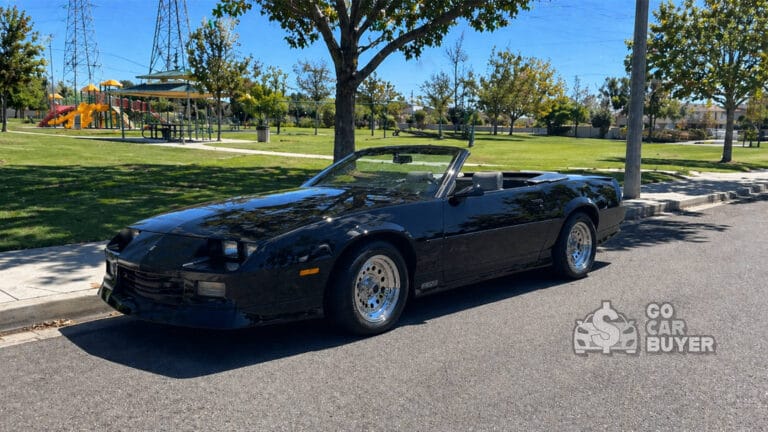
Black Chevy Camaro purchased by go car buyer we purchased all types of classic cars

Classic Muscle Cars

Muscle cars are always in demand and I buy all of them. The Chevrolet Chevelle is one of the most popular — the 1970 LS6 is the holy grail, with a 450 horsepower 454 that some experts say was closer to 500 horsepower thanks to the high compression ratio and that massive Holley carburetor. Car and Driver tested it at 5.4 seconds to 60 back in 1970 — imagine what it would do with modern tires. The SS 396 is the other one everyone fights over, and some people argue it was actually faster in the long run than the 454. I buy any Chevelle regardless of trim or condition.

The Chevrolet Camaro — first-generation Z28s are the most famous. The Z28 package was never advertised to the general public, which is part of what makes it legendary. It came with a 5.7-liter engine putting out 360 horsepower, front and rear spoilers, and racing stripes on the hood and trunk. Second-generation Camaros from ’70 to ’81 are coming up in value too. SS models, Rally Sports, base models — I buy them all.

Pontiac GTOs — often called the first muscle car. The 1969 GTO Judge stands as one of the most beautiful American cars of the ’60s. It featured that body-colored Endura front bumper, an industry first that let Pontiac sculpt a front end no other car with a metal bumper could copy. The Judge came with the Ram Air III at 360 horsepower, and buyers could option up to the Ram Air IV at 370. Only 6,725 Judge hardtops and just 108 Judge convertibles rolled off the line in 1969 — that rarity is why they command six figures today.

Pontiac Firebirds and Trans Ams also hold strong value. The ’78 Trans Am blew up after Smokey and the Bandit. Its 455 engine with 7.5 liters and over 370 horsepower is considered the last of the legendary muscle car engines. However, the earlier Super Duty Trans Ams with lower production numbers bring significantly more money.

Dodge Chargers — the ’69 Charger R/T with the 440 Magnum or 426 Hemi remains one of the most desirable muscle cars ever built. The R/T designation meant “Road/Track” and only appeared on high-power cars.

On the Dodge Challenger side, the 1970 R/T offered engine options ranging from the 383 Magnum at 335 horsepower all the way up to the 426 Hemi at 425 horsepower, with the 440 Six-Pack at 390 horsepower in between. The Hemi Cuda is the ultimate — a 426 cubic inch, 6.9-liter fully cast-iron beast that hit 0-60 in 5.6 seconds in 1970. Plymouth Barracudas, Plymouth Road Runners — I buy all Mopar muscle.

Ford Mustangs — the 1968 Shelby GT500 packed a 427 cubic inch engine making 625 horsepower, paired with a six-speed manual designed for drag racing. The Boss 429 is a real beast. Ford hired an outside company, Kar Kraft, to literally redo half the engine compartment just to squeeze it in. Today a ’69 Boss 429 sells for over $200,000 at auction. I also buy the Boss 302, Mach 1, and Shelby GT350.

Beyond Mustangs, I buy Mercury Cougar Eliminators — the ’69 came with a 351 cubic inch engine at 290 horsepower. Chevy Novas and Chevy Impalas too — the ’67 Impala SS ran a 6.7-liter V8 at 425 horsepower. AMC Javelins, AMC AMXs, Buick GSX, Buick Gran Sport, Oldsmobile 442 — especially the W-30 package. A numbers-matching W-30 sits in a completely different price bracket.

Sonny Miller from GoCarBuyer inspecting a classic Chevy truck for purchase in Southern California.
I buy classic Chevy trucks in any condition—running or not.

Classic Trucks and SUVs

The classic truck market in Southern California is huge. I buy Chevy C10s, C20s, K5 Blazers — the lowered K5s have their own following now, but the four-wheel-drive models are still the ones that bring serious money. Square body Chevys and GMCs from the ’73 to ’87 era — these are hot right now. Regular cab is what buyers want the most. The OBS trucks from the late ’80s and ’90s are climbing in value too — and on those, the step sides tend to do better than fleet sides, which surprises people. I also buy Ford F-100s, F-150s, Ford Broncos, Chevy Suburbans, GMC Jimmys, Dodge Power Wagons, International Scouts, and Jeep Wagoneers. Stock, modified, project — any condition.

We buy classic Chevy trucks, C10s, and square body project cars for cash in Southern California.
Got a classic C10 or square body Chevy sitting around? I pay top-dollar cash for classic trucks in any condition. Call Sonny!

Classic Cadillacs and Lincolns

Cadillacs from the ’40s through the ’70s are some of the most collectible American cars — and honestly, they’re undervalued compared to what people pay for Chevys. You could buy three Cadillacs for the price of one tri-five Chevy. The smart collectors figured that out years ago. Now Cadillacs, Oldsmobiles, and Buicks are finally getting their due.

The 1941 Series 62 Convertible was the car celebrities and the ultra-rich wanted to own. The 1948 Series 62 introduced the first rear tail fins — a design that defined American cars for the next decade. The 1959 Eldorado Biarritz sits at the peak of the fin wars. Those massive tail fins make it one of the most iconic Cadillacs ever produced. Only 1,320 were built, and they cost triple the price of an average new car in 1959. By 1960, Cadillac pulled back from that excess with more restrained but still prominent fins.

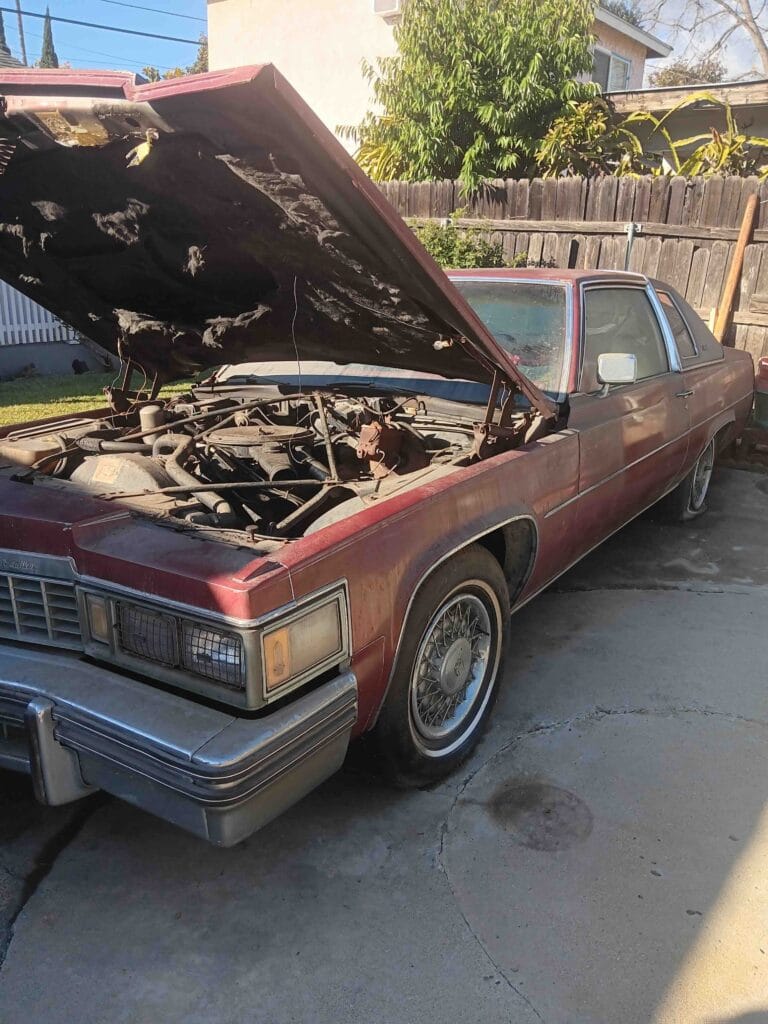
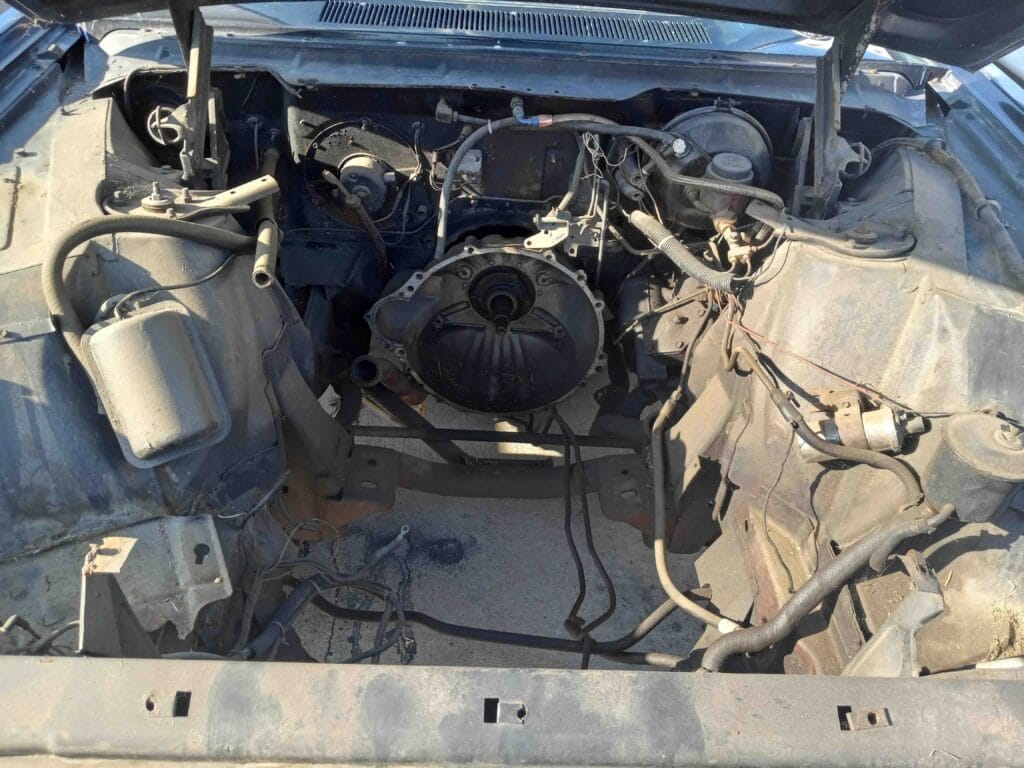
We buy stalled classic Chevy projects with missing engines for cash across Southern California.

By ’63, Cadillac was cleaning up its act — moving away from huge fins and excess chrome into a more conservative, sleek, and honestly more attractive car. The Series 62 sat below the Coupe de Ville as the entry level — same body, same car, but with vinyl and cloth instead of leather. These cars grow on you because there’s so much styling detail everywhere you look. The ’63 ran the 390 cubic inch V8 at 325 horsepower — the last year for that engine before the 429 arrived in 1964.

The 1967 Eldorado stands at the top of GM design in the ’60s. It introduced hidden headlamps, a power dome hood, and vertical bladed tail lamps that later inspired Cadillac’s Art and Science design theme. Under the hood sat a 429 V8 in ’67, upgraded to the 472 in ’68. Only about 177,000 were made, and many have gone overseas — so clean ones keep getting harder to find. The Fleetwood Talisman from ’74 to ’76 carried the world’s largest production V8 — Cadillac’s 500 cubic inch, 8.2-liter engine. Meanwhile, the ’71 Coupe de Ville offered telescopic steering, cruise control, and climate control that was years ahead of its time. The ’76 to ’79 Seville answered Mercedes-Benz with electronic fuel injection and digital dash readouts. I buy all Cadillac models — Series 62s, Coupe de Villes, Sedan de Villes, Eldorados, Fleetwoods, Sevilles.

Classic Lincolns

Lincoln Continental Mark IIIs, Mark IVs, and Mark Vs are beautiful cars. The ’69 Mark III brought a real departure in design — clean European elegance instead of chrome excess. Ford spent a fortune on tooling just for the front end, and it rode on a 460 V8 with first-class build quality. The ’72 Mark IV stands as the pinnacle — first year, most powerful, and the cleanest front-end design before the government-mandated five-mile-per-hour bumpers changed the look in ’73. It also marked the last year the 460 actually had real power.

The Mark V from ’77 to ’79 brought the disco era — opera windows, half Landau vinyl roofs, and that late-’70s style. And the ’61 to ’67 Lincoln Continental convertible was arguably 10 years ahead of its time. It featured squared-off sculpted panels with minimal chrome when everyone else still ran huge fins. The four-door convertible with suicide rear doors and a top that hid completely below the trunk panel remains a work of art. I buy all Lincoln Continentals, Town Cars, and Mark series.

Classic Buicks, Oldsmobiles, and Pontiacs

These are the cars the smart collectors have been buying for years while everyone else fought over Chevys. The Buick Riviera is one of the most beautiful cars GM ever made. The first-generation ’63 to ’65 was designed as a cross between a Ferrari and a Rolls-Royce. The ’65 is the one collectors want because it’s the only year with hidden headlamps — clean Grand Sports now go for $80,000 to $100,000. However, the ’64 is actually the better mechanical car with the standard 425 cubic inch V8 instead of the 401 nailhead in the ’63 and ’65.

The second-gen ’66 Riviera is what I’d call a banker’s hot rod — understated, a little sinister, and it just looks expensive without being flashy. And the boat tail ’71 Riviera gets more attention at a gas station than a ’60s Mustang. People either don’t know what it is or haven’t seen one in so long they can’t stop staring.

The 1966 Oldsmobile Toronado was the first full-size front-wheel-drive car from GM — those massive wheel arches and thin vertical bladed fenders looked like nothing else on the road. The ’66 is the one to have — the ’67 changed the taillights and grille and lost some of the drama. The Oldsmobile 442 — especially the W-30 — is serious money. The 1965 Pontiac Grand Prix had that Coke bottle styling and hidden taillights that gave it a sinister feel. The 1969 Grand Prix was John DeLorean’s vision — a muscular personal luxury coupe with one of the first truly driver-centric cockpits in a GM car. It sold like crazy compared to the previous generation. I buy all Buick Rivieras, Buick Skylarks, Oldsmobile Toronados, Oldsmobile Cutlasses, Pontiac Grand Prixs, and Pontiac Catalinas — any year, any condition.

Classic Porsche

Porsche 911s are some of the most valuable classic cars on the road. The original 911 from ’63 to ’73 started it all — rear-mounted air-cooled flat-six, precision steering, and that unmistakable silhouette. The ’73 Carrera RS with its ducktail spoiler is considered the greatest classic 911 by many collectors. The 930 Turbo from ’75 was one of the first road cars with turbocharging — 260 horsepower and the fastest production car in Germany at the time. The 964 from ’89 had 85% new components but still looked like a 911. The 993 from ’94 was the last air-cooled 911, and that’s what makes it so collectible today — air-cooled Porsches command a serious premium over water-cooled models. I also buy Porsche 356s, 914s, and 944s. Running, not running, project cars — I’m interested in all of them.

Fox Body Mustangs and ’80s Classics

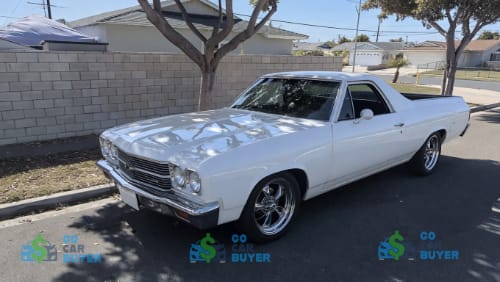
The ’80s market is heating up. Fox body Mustangs from ’79 to ’93 are getting real collector attention now — especially the four-eyed cars from ’79 to ’86 before Ford went to fuel injection and the roller motors in ’87. The GT models from ’87 to ’93 were everywhere in high school parking lots back in the day, and now they’re becoming collectible. The 5.0 with a five-speed manual is the one everyone wants. I also buy Chevy Monte Carlos, Buick Grand Nationals — the turbo GN and GNX are serious money now — Pontiac Fieros, Chevy El Caminos, and any other ’80s classic you’ve got sitting around.

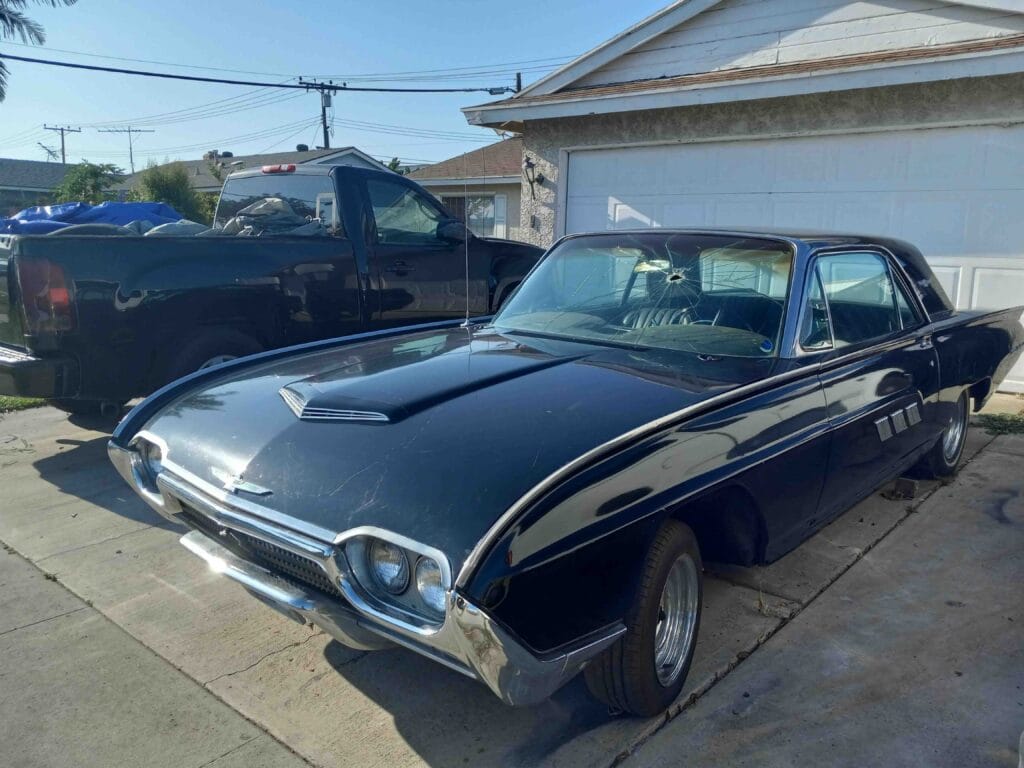
We Buy Non-Running Classic Ford Thunderbirds and Barn Finds for Cash in Southern California.
Flat tires? Covered in dust? Patina? I love original barn finds. Call Sonny!

Other Classic and Collector Cars

Chevy Corvettes — the ’63 to ’67 C2 Sting Ray is considered by many the most beautiful American car ever designed. Larry Shinoda created it under Bill Mitchell’s direction — the coupe offered the best sporty fastback of any ’60s car, and the convertible with its top tucked into the trunk was a work of art. I buy all Corvettes — C1 through C4, split-window coupes, big-block cars, whatever you’ve got.

I also buy Chevy Impalas and Bel Airs, Ford Thunderbirds, and Mercury Cougars. The ’63 to ’64 Studebaker Avanti looked more like an expensive European touring car than anything American — no front grille above the bumper, long hood, short deck, fastback roofline. Its styling stayed so modern that production continued for decades after Studebaker folded. Additionally, I purchase Volkswagen Beetles, VW Buses, split-window VWs, Karmann Ghias, Datsun 240Z/260Z/280Z, Toyota Land Cruisers, Triumph TR6, MGB, and Jaguar E-Type. If it’s a classic or collector car in Southern California, call me.

What’s Your Classic Car Actually Worth?

This is the biggest question I get. The honest answer — it depends on a lot of factors. The best way to know what something is worth is to actually buy and sell them, not just talk about them. I’ve done this for over 20 years, so I’ve seen what these cars actually sell for — not what someone asks for them at a car show.

What Affects Your Classic Car’s Value

First, body style matters more than most people think. Two generations of the same car can sit 30-50% apart in price just because of the body style. Second, matching numbers add serious value — original engine, original transmission. Options like factory air conditioning, power steering, power windows, and rare trim packages also make a difference. For example, a numbers-matching W-30 Oldsmobile 442 sits in a completely different price bracket than a base 442 with a replacement engine. And the condition matters, but so does the cost to finish it. You simply can’t build these cars and sell them for a profit — a finished one often costs less than building one from scratch.

Stock vs. Modified — What the Market Wants

The market has shifted on modifications. The over-chromed, bolt-on look from the ’80s doesn’t sell anymore. Instead, cleaner modern resto-mod builds attract today’s buyers. However, perfectly stock original cars — when they’re truly original — almost always bring the most money. Original unrestored survivors in great condition are the gold standard. Mileage matters, but condition matters more. A 60,000-mile car with beautiful maintenance and garage storage can outsell a 20,000-mile car that sat neglected. On top of that, restored cars often lose value because someone else took them apart and screwed them up in the process — that’s exactly why original survivors command a premium. And if your car has nitrous, that actually lowers the value because it tells buyers the car has lived a hard life.

The Classic Car Market in Southern California

Southern California is one of the best places in the country to own and sell a classic car. The weather means less rust, less salt damage, and more cars that have been garage-kept in good condition. There’s a massive car culture here — from the lowrider scene to the muscle car community to the European sports car collectors. That means there’s always demand, and it means your classic car is probably worth more here than it would be sitting in a barn somewhere in the Midwest.

However, the market changes constantly. Some body styles that were hot five years ago are cooling off. The little coupes from the ’30s and ’40s — a lot of the guys who collected those are aging out, and their kids don’t want them. As a result, prices are dropping on some of those older cars. Meanwhile, square body trucks, K5 Blazers, OBS trucks, Fox body Mustangs, and Japanese classics like the 240Z keep climbing. On top of that, Buicks, Oldsmobiles, and Pontiacs that nobody cared about ten years ago are finally getting their due — you can’t find a clean Riviera or Toronado or boat tail for what they used to cost.

The auction market has changed things too. Everything now moves toward an auction setting where finding a deal in a vacuum is nearly impossible. Before the internet, you could get huge bargains because people had no way to research what their car was worth. Now everyone has seen what a Barrett-Jackson car sold for and they think theirs matches that number — but auction prices include buyer premiums, and those are often the best examples in the country. So if you’re sitting on a classic car and thinking about selling, keep in mind the market is always moving. Waiting doesn’t always mean more money.

Tips for Selling Your Classic Car

If you’re thinking about selling your classic car privately, here are some things to keep in mind. First, know your car. What year, what engine, what options, what’s original and what’s been replaced. Buyers will ask detailed questions and you need to have answers. If you have a Carfax, maintenance records, or any documentation of the car’s history, get it organized. That stuff adds real value.

Next, take quality photos — 50 to 100 at least. Get every angle, the interior, the engine bay, the trunk, the undercarriage. Shoot the VIN plate, the data plate, the odometer. If the car runs, record a video of it starting and idling. Show the exhaust. If it drives, record a driving video too. Buyers want to see and hear the car before they make the trip.

Finally, be realistic about your price. Just because you saw the same car sell for $85,000 at Barrett-Jackson doesn’t mean yours matches that number. Auction prices include buyer premiums, and those cars are often the best examples in the country. Your car in your driveway with 30 years of patina and a few needs is a different conversation. Price it fair and it sells. Price it too high and it sits.

If all of that sounds like too much work — that’s exactly why I’m here. I come to you, look at the car, make you a fair cash offer on the spot, and handle everything. No listing, no tire kickers, no scammers, no waiting.

We Buy Stalled Classic Car Projects and Basket Cases with Missing Engines for Cash in Southern California.
Engine missing? Operation stalled? I love basket cases. Call Sonny for a cash offer!

Why Sell Your Classic Car to GoCarBuyer

I’ve been buying classic cars across Southern California for over 20 years. I know what these cars are worth because I’ve actually owned them, bought them, and sold them — not just talked about them. Whether you’ve got a running, driving show car or a barn find that hasn’t moved in 15 years, I’ll make you a fair offer.

I come to you — your garage, your storage unit, wherever the car is. I pay cash or check on the spot. Even if you lost the title, I handle all the DMV paperwork. No smog issues, no back registration problems, no hassle. I buy classic cars in any condition — perfect, project, or parts car.

Whether you’re in Los Angeles County, Orange County, Riverside County, San Bernardino County, San Diego County, or Ventura County — I come to you, usually within hours of your call.

Frequently Asked Questions About Selling Your Classic Car

What classic cars do you buy?

All of them. American muscle, European sports cars, classic trucks, luxury cruisers, project cars, barn finds. Any make, any model, any year, any condition.

How do I know what my classic car is worth?

Call me and describe what you have — year, make, model, engine, condition, what’s original. I’ll give you a realistic number based on 20+ years of actually buying and selling these cars, not guessing.

Do I need to restore my classic car before selling?

No. In many cases you’ll spend more on a restoration than you’ll get back in the sale price. I buy them as-is — running, not running, project, parts car.

What if my classic car hasn’t run in years?

No problem. I buy barn finds and garage finds all the time. Dead battery, flat tires, mechanical issues — none of that matters to me.

What if I lost the title to my classic car?

I handle all the DMV paperwork. Lost titles, missing registration, no tags — I take care of it.

Do you buy modified or resto-mod classic cars?

Yes. Stock, modified, LS-swapped, supercharged — I buy them all. The value depends on the quality of the build and what the market wants, but I’m interested regardless.

How fast can you come see my classic car?

Usually within hours of your call. I serve all of Southern California — LA, Orange, Riverside, San Bernardino, San Diego, and Ventura counties.

How does GoCarBuyer work?

Call me, describe the car, I give you a quote. If we’re close, I come to you, inspect it, and pay you on the spot — cash or check. I handle all paperwork. No pressure, no runaround.

Ready to Sell Your Classic Car?

Don’t let it sit any longer. The market moves, and waiting doesn’t always mean more money. Call me — I answer personally and I’ll give you a fair number. See what other Southern California car owners say on our customer reviews page.
Sonny Miller — (714) 900-3723
GoCarBuyer.com
Cypress Office: 10601 Walker St Suite 102, Cypress, CA 90630
Van Nuys Office: 6360 Van Nuys Blvd #16, Van Nuys, CA 91401
Open 8 AM – 8 PM, 7 Days a Week — Find Us on Google Maps

share post ⟶

Similar Posts