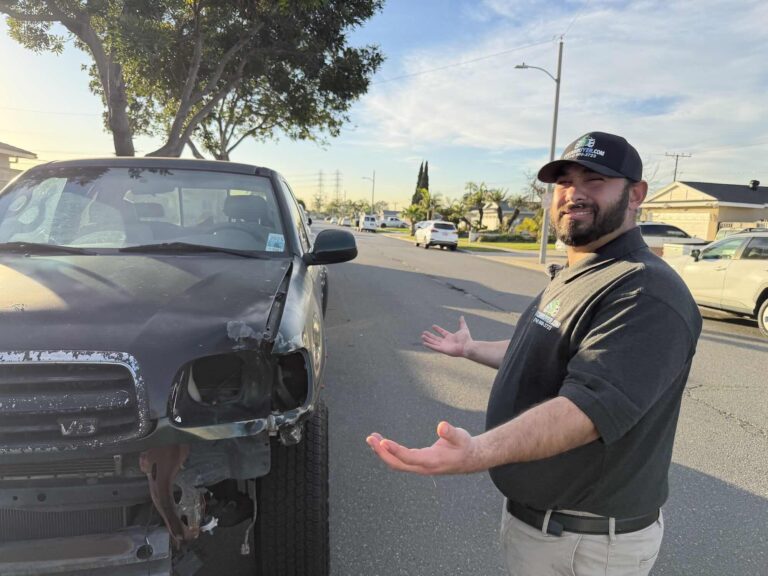

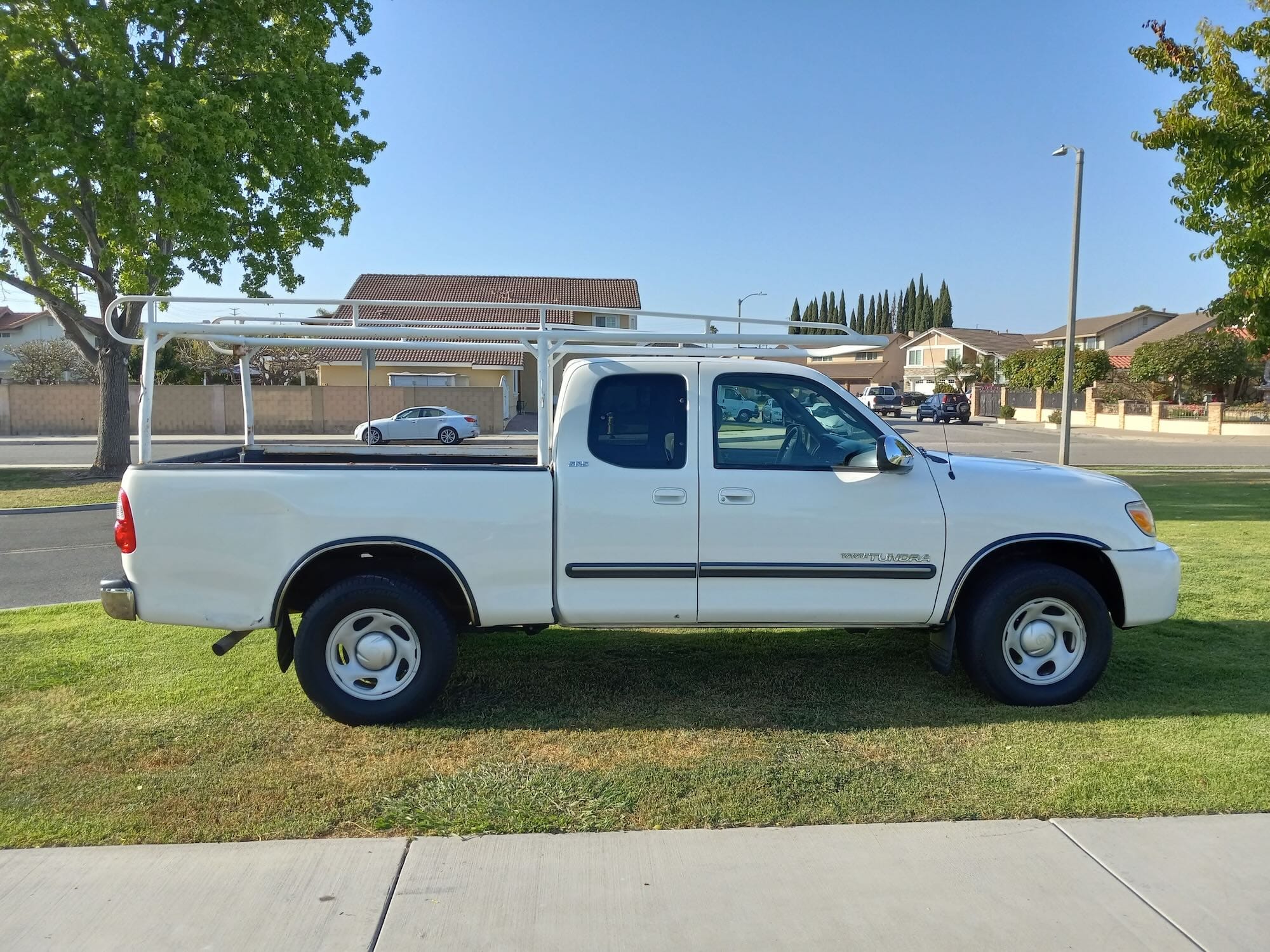
The Tundra doesn’t get as much love as the Tacoma, but it should. These full-size trucks hold value surprisingly well and those V8 engines regularly hit 300,000 miles when owners keep up with maintenance. Whether yours is a first-gen with the bulletproof 4.7L V8, a second-gen with the 5.7L, or a newer hybrid — I buy them all, and I know exactly what each generation is worth.
Call me at (714) 900-3723 before you list it. I’ll give you a number based on the specific engine, year, and what’s going on with it — not some generic truck estimate. I’m Sonny Miller with GoCarBuyer.com.
Why Tundras Hold Value Like Tacomas
The Tundra benefits from the same Toyota reputation that keeps Tacoma prices high. The first-gen 4.7L V8 (the 2UZ-FE) shares its DNA with Land Cruisers and Lexus LX470s — and that engine is legendary. These engines routinely pass 300,000 or even 400,000 miles with basic maintenance. That kind of longevity is why a 20-year-old Tundra can still sell for $8,000 to $15,000 in good condition.
Dealerships know these trucks hold value too, which is why I pay strong numbers for Tundras compared to other full-size trucks in the same age range. A Silverado or F-150 with 250,000 miles is a harder sell. A Tundra with the same mileage still has demand.
What I Look for by Generation
1st Generation (2000–2006) — The Classic 4.7L V8
Toyota built these Tundras when they first entered the full-size truck market. The 4.7L V8 paired with either a 4-speed or 5-speed automatic (later years got VVT-i) is what makes these trucks special. They came in Regular, Access, and Double Cab configurations — the Double Cab only appeared from 2004 to 2006 and commands the highest prices today.
The biggest thing I check on first gens is lower ball joints. The 1st gen Tundras share the same ball joint design as 1st gen Tacomas and 3rd gen 4Runners — and when these fail, they fail catastrophically. People have died from ball joint failures, so this is a safety concern, not just a repair issue. If your truck still has the originals, I factor that in.
Other common issues on first gens: timing belt replacement every 100,000 miles (it’s an interference engine on some variants — a snapped belt can destroy the engine), radiator internal failure where coolant mixes with transmission fluid creating a “pink milkshake” that destroys the transmission, and exhaust manifold cracks that cause a ticking noise on cold starts. None of these are deal-breakers — I just price them in.
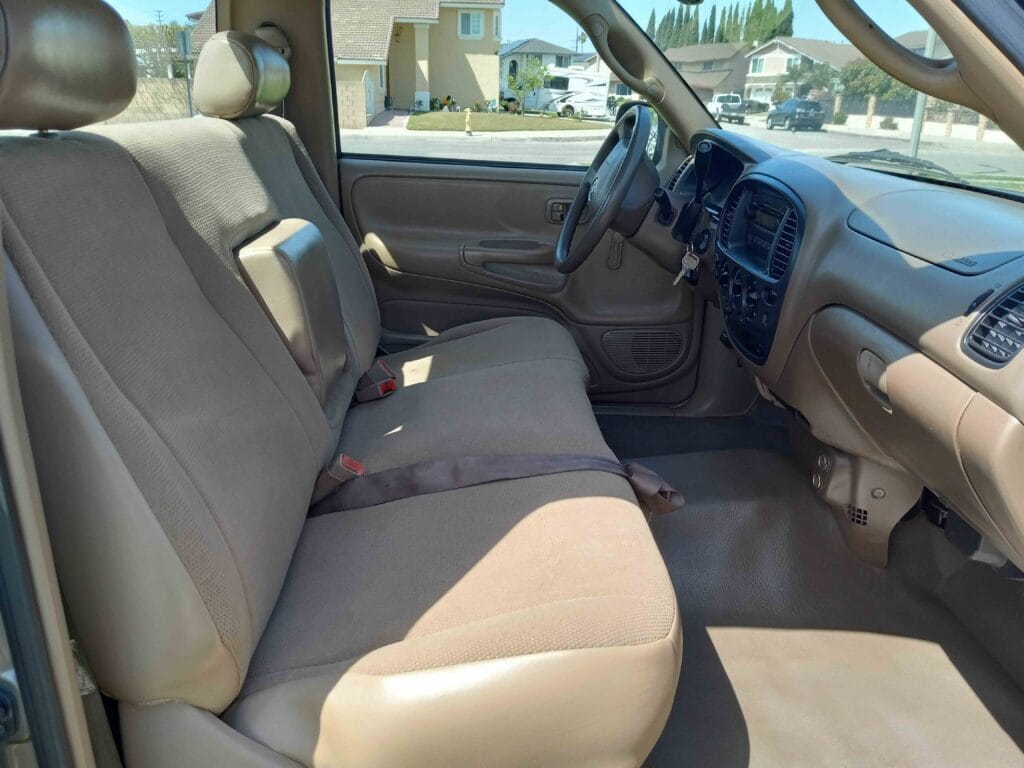
2nd Generation (2007–2013) — The 5.7L Beast
The second gen Tundra got bigger, more powerful, and more refined. The 5.7L V8 with 381 horsepower is the workhorse of this generation. These trucks are proven reliable, though there are a few things I watch for.
Exhaust manifold cracks carry over from the first gen and show up as a ticking noise that fades once the engine warms up. Secondary air pump (smog pump) failures are common and typically show up as a check engine light. Front hub bearings tend to fail around 100,000 to 150,000 miles — you’ll hear a humming noise that changes as you turn. And O2 sensors tend to go out as the truck ages, usually triggering a check engine light.
The valve cover gaskets also tend to leak oil at higher mileage on these. You’ll see oil seeping down the sides of the engine and sometimes smell it burning off the exhaust manifolds. It’s a common maintenance item, not a catastrophic issue.
3rd Generation (2014–2021) — Same Mechanics, New Look
Toyota cosmetically redesigned this generation for 2014, but kept it mechanically very similar to the late second gen. The same 5.7L V8 continued through this generation. These are still relatively young trucks with minimal widespread issues. The main complaints I see are warped brake rotors — a known Tundra issue because of the truck’s weight putting stress on the brakes, especially the front axle. Some owners notice shuddering under braking through the steering wheel.
4th Generation (2022–Present) — The New Turbo V6
The newest Tundras moved away from the V8 to a twin-turbo 3.5L V6 hybrid. These are too new for long-term reliability data, but early reports show interior rattles, occasional trailer connection errors, and the same brake rotor warping the previous generations had. Mechanically, turbocharged engines add complexity compared to the old V8s — but they also deliver strong power and better fuel economy.
What If Your Tundra Has Problems?
Even a Tundra with issues is worth solid money because the underlying truck holds value so well. Whether your Tundra has high mileage, a check engine light, or the registration expired while it sat, none of that kills the deal. I also buy Tundras with serious mechanical issues — blown head gaskets, transmission failures, radiator-to-transmission cross-contamination — because even those trucks still have value in the right hands.
If you’re not sure whether to fix or sell, check out my guide on finding your car’s real value. See what similar Tundras are selling for on Facebook Marketplace and Craigslist — you might be surprised.
Frequently Asked Questions
How much is my Toyota Tundra worth?
More than most other full-size trucks in the same age range. The exact number depends on generation, engine, drivetrain, mileage, and condition. A well-maintained first-gen 4.7L V8 in an Access Cab configuration is worth significantly more than a base V6 Regular Cab. Call me with specifics and I’ll give you an honest number.
Will you buy a Tundra with over 200,000 miles?
Yes. Tundras routinely run past 300,000 miles with good maintenance, so 200K isn’t high mileage for these trucks. I buy them all the time. The 4.7L and 5.7L V8s are proven engines — mileage alone doesn’t kill the deal.
Does the timing belt on a 4.7L V8 affect the value?
Yes, but only if it’s overdue. The 4.7L uses a timing belt that needs replacement every 100,000 miles or 10 years. If yours is past due, I factor in the replacement cost. If the last owner did it recently with records, that actually boosts what I’ll pay.
Is a 4WD Tundra worth more than 2WD?
Yes, noticeably. 4WD Tundras command higher prices because of demand from off-roaders, campers, and people hauling trailers. But 2WD Tundras still hold solid value in Southern California where 4WD isn’t always necessary.
What if my Tundra has a cracked exhaust manifold?
Very common on both first and second gen Tundras. The ticking noise on cold starts that fades as the engine warms up is almost always a cracked manifold. It doesn’t affect the core value much — I factor the repair cost in and move on.
Do I need to go to the DMV to sell my Tundra to you?
No. I bring all the proper paperwork and handle the entire transfer. I come to you anywhere in Southern California — usually within hours — and pay you on the spot.
Ready to Sell Your Tundra?
Tell me the year, engine, mileage, cab configuration, and what’s going on with it. I’ll give you a number based on real market data and my 23 years of buying these trucks across Southern California. No generic estimates, no lowball offers — just an honest number for a truck that actually holds its value.
Sonny Miller — (714) 900-3723
GoCarBuyer.com
Cypress Office: 10601 Walker St Suite 102, Cypress, CA 90630
Van Nuys Office: 6360 Van Nuys Blvd #16, Van Nuys, CA 91401
Open 8 AM – 8 PM, 7 Days a Week — Find Us on Google Maps