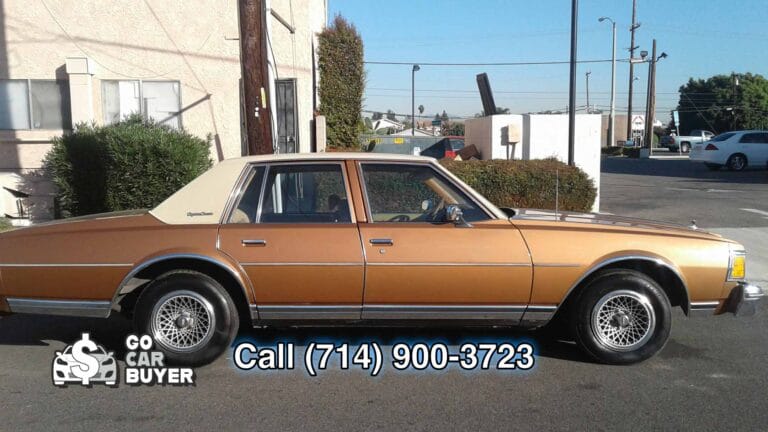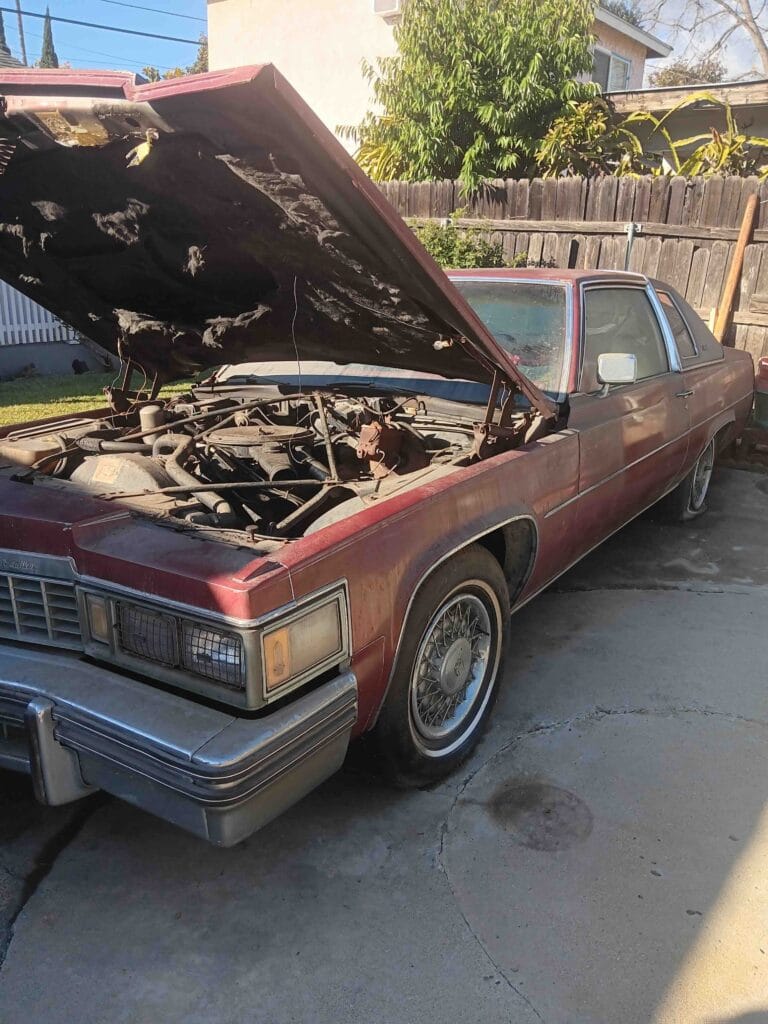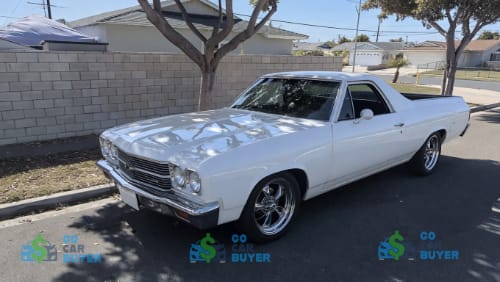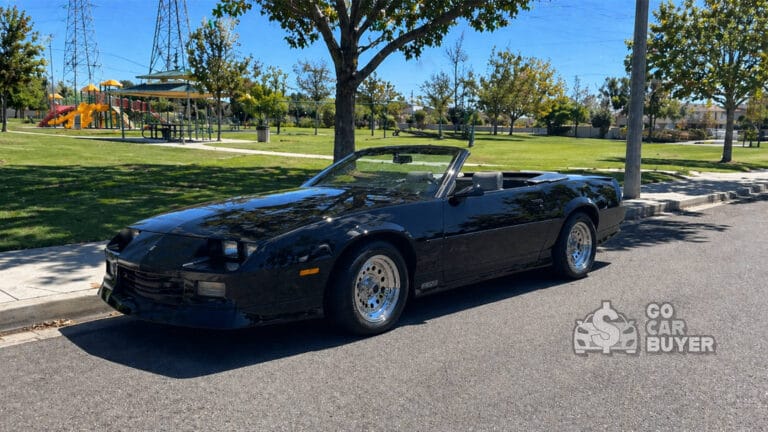


Sonny Miller here. I just wanted to give you guys a little deep, extensive history on Pontiac. And if you’ve got a classic Pontiac you want to sell, need a valuation on, or just want some tips, give me a call at my Orange County number, (714) 900-3723. So let’s get into it and keep reading for the whole history of Pontiac.
The Oakland Years: Before Pontiac (1907–1909)
Oakland comes first (1907)
Pontiac originally started under a different brand name. Before it was Pontiac, it was Oakland.
It was built by a carriage maker named Edward Murphy, who ran the Pontiac Buggy Company making horse drawn carriages. He started the Oakland Motor Car Company in Pontiac, Michigan, alongside an engineer named Alanson Brush, who had come over from Cadillac. The name “Oakland” came from Oakland County, where the plant was set up. So the company came first, and the Pontiac brand name wouldn’t show up for another 19 years.
General Motors is founded (1908)
In 1908, General Motors was founded by William Durant. He built GM as a holding company, and he was an old carriage maker himself, just like Murphy. He started with Buick and quickly piled in Oldsmobile and Cadillac.
GM takes over Oakland (1909)
In 1909, GM took over Oakland. Durant bought half of the company in January, Murphy died that summer, and General Motors took the rest. From there, Oakland became GM’s affordable, entry-level brand — the cheap bottom rung of the ladder.
The Brand Takes Shape (1917–1932)
Chevrolet joins GM (1917)
In 1917, Chevrolet joined GM. Chevy slid in as the new bargain brand, so Oakland got bumped up a little. Now there was a gap between Chevy and Oakland — and that gap is the whole reason Pontiac got invented.
Pontiac is born (1926)
In 1926, Pontiac was made. It was GM boss Alfred Sloan’s idea: fill the price gaps with “companion makes,” junior brands built inside the existing divisions. Pontiac debuted at the New York Auto Show as Oakland’s companion — a six-cylinder car priced just above Chevy, sharing Chevy’s body underneath to keep it cheap. It was an instant sensation. Affordable, a smooth six, and it sold like crazy.
The companion that outlived its parent (1929–1932)
Here’s a twist nobody expected: the kid outlived the parent. Pontiac started outselling Oakland — its own parent brand — by a wide margin.
Meanwhile, the Great Depression was killing brands left and right. The other companion makes — LaSalle, Viking, and Marquette — all died off. So in 1931, GM did the unthinkable. It shut down Oakland and kept Pontiac. The division was officially renamed Pontiac in 1932. To this day, Pontiac is the only companion make in GM’s history that ever outlived its parent.
Where the name “Pontiac” comes from
By the way, the name Pontiac comes from Chief Pontiac, the Ottawa war leader who led a famous uprising against the British back in 1763. It’s also the name of the Michigan town where the cars were built. For decades, Pontiac put a Native American head right on the grille — even a lit-up one — before it eventually became that red arrowhead badge.
The Straight-Eight Era (1932–1948)
The straight-eight years (1932–1933)
Now here come the straight-eight years. Pontiac briefly offered a V8 — a 251 it inherited from the old Oakland company — then dropped it and switched to straight-eights in 1933, which made it the cheapest eight-cylinder car in America. That straight-eight defined Pontiac for the next 20 years. It was smooth and affordable, but people used to say it was slow — dependable, sure, but a little bit boring.

The Silver Streak gives Pontiac a face (1935)
In 1935, Pontiac finally got its own face. The Silver Streak was huge for the brand. A designer named Frank Hershey ran a band of chrome straight down the hood, and that streak disguised the shared Chevy body and gave Pontiac an identity all its own. Sales boomed to about 179,000 units — fourth in the whole industry. And it was that same Hershey, by the way, who later put the first tailfins on a Cadillac. The streak stuck around for more than 20 years.
The Torpedo (1940–1942)
From 1940 to 1942, the Torpedo was Pontiac’s big new full-size car — still running that straight-eight. The last pure pre-war Pontiac rolled off the line in February 1942. Then the factory went quiet.
Pontiac goes to war (1942–1945)
Like all of Detroit, Pontiac stopped building cars and built for the war effort instead. They made 20mm Oerlikon and 40mm Bofors anti-aircraft cannons, plus aerial torpedoes. There’s a little irony there — they were building actual torpedoes while they had a car called the Torpedo. Kind of ironic.
Pontiac finally gets an automatic (1948)
In 1948, Pontiac got an automatic — but it didn’t invent it, and that’s important to get right. Pontiac added the Hydra-Matic transmission. GM’s Oldsmobile division was the one that actually invented the Hydra-Matic, back in 1940. It was the first mass-produced, fully automatic transmission, and it changed the game — developed by an engineer named Earl Thompson and his team. Cadillac got it in 1941. Pontiac was the third GM division to offer it, a full eight years after Oldsmobile. And here’s a cool part: that’s the same transmission that ran in tanks like the M5 during the war. So you couldn’t kill those transmissions. They were literally built like a tank — they were used in tanks.
Into the Modern Era (1949–1957)
The all-new Chieftain (1949)
In 1949 came the all-new Chieftain, the first truly new post-war Pontiac. It had modern slab-side styling on GM’s A-body, replacing the old Torpedo. The Silver Streak was still on the hood, and so was that lift-up Indian-head ornament. This was Pontiac stepping into the modern era — the golden era.
The Catalina hardtop (1950s)
In the 1950s, Pontiac jumped on the hottest post-war styling trend: the pillarless hardtop coupe, the one that looks like a convertible with the top up. The Catalina started out as a flashy trim, and that name ended up sticking around for decades.
A real V8 at last (1955)
In 1955, Pontiac finally got a real, strong V8 — and this was the turning point of the whole era. It was Pontiac’s first modern overhead-valve V8, the Strato-Streak: a 287 cubic inch making around 180 horsepower, in an all-new body. The slow old straight-eight was dead, and for the first time Pontiac had the power to run with everybody else. This is the engine the whole performance story gets built on. This is why they called it the Excitement Division. This one engine changed the entire direction of Pontiac.
New blood takes over (1956)
In 1956, new blood took over. A guy named Bunkie Knudsen became Pontiac’s boss at just 43, and he brought in two future legends: engineer Pete Estes and a young hotshot from Packard named John DeLorean. Now remember that name — DeLorean.
Knudsen’s whole philosophy fit in one line: you can sell an old man a young man’s car, but you can never sell a young man an old man’s car. That was the mission — kill the grandpa image.
Goodbye Silver Streak, hello Bonneville (1957)
In 1957, it was out with the old and in with the new. They ripped the Silver Streak off the car at the last minute, ending a 22-year signature, because Knudsen thought the streaks looked like suspenders. Then they launched the Bonneville — a loaded, fuel-injected halo convertible. Full fuel injection was wild for the time, and the thing cost more than a base Cadillac. Barely any sold, but that was the point. It told the world Pontiac had changed.
The Excitement Division (1959–1963)
Wide Track (1959)
In 1959, Estes pushed the wheels way out for a planted, aggressive stance and brought back the split grille. That’s the Pontiac face from here on out, and it was a smash. Sales jumped around 77%, and the car won Motor Trend Car of the Year. The 389 V8 went right across the lineup — Catalina, Star Chief, Bonneville.
Pontiac becomes a racing monster (1960–1963)
Before the muscle cars ever showed up, Pontiac was a racing monster. They tore up the tracks with the 389 and the 421 Super Duty engines. In 1961 alone, Pontiac won 30 out of 52 NASCAR races — basically owning the sport.
Fireball Roberts ran a 421. Smokey Yunick built the cleanest car in the pit. And Junior Johnson, whose car was so much slower, discovered he could keep pace by tucking in right behind a faster Pontiac — and that’s how drafting in stock car racing got discovered.
On the drag strip, a dealer called Royal Pontiac and a marketing guy named Jim Wangers built and raced hopped-up Pontiacs, and Wangers himself won the 1960 NHRA Nationals. The wildest of all was the 1963 “Swiss Cheese” Catalina — its frame was literally drilled full of holes to save weight. Only about 14 were built, and they go for around half a million dollars today.
DeLorean’s Tempest (1961)
Right in the middle of all this, in 1961, DeLorean played mad scientist with the Tempest, one of the strangest cars Detroit ever sold. The engine was literally half of a 389 V8, a slant-four they called the Trophy 4. The transmission sat way out back in a rare transaxle, connected by a curved, flexible driveshaft everybody called the “rope drive.” Weird, but brilliant. It won Motor Trend Car of the Year, Pontiac’s second in three years. And that little Tempest body? That’s the one they were about to make famous.
And yes, this is the same John DeLorean who’d later build the stainless-steel car from Back to the Future.
The racing ban that backfired (1963)
In January 1963, GM banned all factory racing across the whole corporation and killed the Super Duty program overnight. Here’s why that matters: with racing gone, Pontiac took all that performance energy and dumped it straight into the street. The ban didn’t kill the excitement — it created the muscle car as we know it.
The Legend Years (1964–1974)
The GTO (1964)
This is where the legend years really start. n 1964 came the GTO (Gran Turismo Omologato, an Italian phrase that translates to “Grand Touring Homologated”), the big one.
GM had a rule: no engine over 330 cubic inches in a midsize car. But DeLorean and his guys — ad man Jim Wangers and engineers Russ Gee and Bill Collins — found the loophole. A whole new model needed corporate approval, but an option package didn’t. So they boxed up the big 389 V8 as an option on the
midsize Tempest Le Mans and called it the GTO, a name swiped right from Ferrari. Bigger engine, lighter car — the hot-rod formula, now straight from the factory. GM figured maybe 5,000 would sell. They sold about 32,000. The “Tiger” ad campaign went wild. This is the car that started the whole muscle car era. The option to look for is the famous Tri-Power — three two-barrel carburetors.
The Banshee that got away (1964)
Also in 1964, DeLorean built a sleek little two-seat sports car called the Banshee — an affordable Corvette fighter. GM killed it for being too good; they were scared it would steal Corvette sales. Here’s the kicker: a 1968 Corvette came out looking awfully like it. A prototype got saved from the crusher.

DeLorean runs the show (1965)
On the strength of the GTO, DeLorean was made head of Pontiac in 1965 at just 40 — the youngest division chief in GM’s history. And the GTO took off.
Peak GTO and a hidden gem (1966)
In 1966, the GTO peaked at nearly 97,000 cars. Pontiac also dropped the OHC-6 Sprint, DeLorean’s overhead-cam six — his attempt at an American Jaguar. It could run with the V8s, so they nicknamed it the “Impostor.” Way ahead of its time. This is also the year GM banned those multi-carb setups everywhere except the Corvette.
The Firebird is born (1967)
In 1967, the Firebird was born — Pontiac’s pony car, its answer to the Mustang and the Camaro. It shared GM’s F-body with the Camaro, but it got a Pontiac engine and that signature split-grille nose.

Introduced in 1969 to dominate the street scene, the Pontiac GTO “The Judge” option package paired a standard 400 cubic inch Ram Air V8 engine with aggressive styling elements. This iconic model represents the peak performance attitude of the golden era of American muscle cars.
The Judge, the Trans Am, and the Grand Prix (1969)
1969 brought three big ones. The Judge was a loud GTO package — wild paint, decals, a spoiler — named after the “Here Comes the Judge” bit from Laugh-In. The first Trans Am showed up as a Firebird option, white with blue stripes, named after the racing series — Pontiac actually paid the SCCA a fee for every car they sold. Only about 700 were built that first year. And the long-hood 1969 Grand Prix redesign basically kicked off the whole personal-luxury-coupe craze.
The last true muscle car (1973–1974)
By 1973 and ’74, emissions and insurance were strangling muscle cars everywhere. But Pontiac built the Super Duty 455 — the SD455 — a ground-up race engine in the Trans Am, and it’s now considered the last real muscle car. Only a couple hundred were built, and clean ones go for around $135,000 to $250,000. This is also when the famous “screaming chicken” hood decal showed up, a $55 option in 1973. A designer named John Schinella fought GM’s bosses for years to get it approved, and it became the most famous decal in car history. I personally love it. It’s beautiful.
The first GTO bows out (1974)
In 1974, the original GTO bowed out, ending its run on a smaller economy-car body. A quiet finish for the car that started it all.
Pontiac on the Screen and the Boulevard (1974–1982)
The Rockford Files (1974–1980)
From 1974 to 1980, The Rockford Files had James Garner playing an LA private eye living in a trailer on the beach in Malibu, driving a gold Firebird Esprit — and he did his own stunt driving. The “Rockford turn” is even named after him.

Smokey and the Bandit (1977)
In 1977, Smokey and the Bandit gave us Burt Reynolds’ black-and-gold Trans Am. The car basically became a character, and sales exploded — from about 47,000 Trans Ams in ’76 to over 117,000 by ’79, outselling its own sibling for the first time. It’s one of the most famous movie cars ever made, and the survivors have sold for around half a million dollars. This one’s one of my favorites — me, I prefer it over the Camaro in those years.
Knight Rider (1982)
In 1982, Knight Rider gave us KITT, a black Trans Am that talked and drove itself. Every kid in America wanted one.
The music and the boulevard
They wrote songs about these cars, too — “Little GTO” by Ronny and the Daytonas was a hit back in 1964. And out here, Firebirds, Trans Ams, and GTOs were the cars cruising Van Nuys Boulevard on Saturday nights. That’s the same street my office is on, just saying.
The Leaner Years (1984–2008)
The Fiero (1984–1988)
The leaner years were coming. From 1984 to 1988 there was the Fiero — a genuinely cool idea, a little two-seat, mid-engine sporty car. But Pontiac built it on the cheap out of the GM parts bin, and the early ones had engine-fire problems that led to a full recall. By 1988, it finally got the suspension it deserved — and that’s the year GM killed it. It’s a cult favorite now.
The slow fade
Also starting around 1984, the bigger problem set in. GM folded Pontiac’s engineering and design in with the other divisions, and the brand slowly turned into rebadged Chevys. The “We Build Excitement” ads kept running over cars that had less and less of it.
The Aztek and Breaking Bad (2001–2005)
From 2001 to 2005 there was the Aztek, mocked as one of the ugliest cars ever built. Then Breaking Bad put Walter White behind the wheel of a green one — picked on purpose to show a beaten-down guy — and it turned into a cult icon. Young buyers hunt them down now. That’s Pontiac for you. Even the punchline ended up famous.
One last roar (2004–2008)
From 2004 to 2008, Bob Lutz tried to bring the magic back — a revived GTO, a real V8 coupe; the Solstice roadster; and in 2008, the G8, a 400-plus-horsepower muscle sedan. They were genuinely good cars. Too late, though. They never caught on.
The End (2009–2010)
The decision (2009)
In 2009, the decision came down. GM went bankrupt, took a federal bailout, and had to cut four of its eight brands. Pontiac was one of them, along with Saturn, Saab, and Hummer. The end was announced on April 27, 2009.
Lights out (2010)
In 2010, the lights went out. The last Pontiac, a white G6, rolled off the line in Orion Township, Michigan, and the dealers closed up. Eighty-four years, 1926 to 2010. And at the very end, Pontiac was still GM’s third best-selling brand, with the youngest buyers of any of them. There just wasn’t enough excitement left over to save it.
That’s the History of Pontiac
Very sad — but I love the classic Pontiac as a brand. They built some of the most iconic cars ever made in America, and that’s American history itself right there. Pontiac’s gone, but the cars aren’t. You can still find them the GTOs, the Judges, the Trans Ams, the Fieros — out here in SoCal garages, and they still turn heads.
And if you guys are interested in this kind of content, please share it on social — I appreciate you guys. I just wanted to give you an extensive history of Pontiac, a piece of American history and a legendary car maker. Thank you, and have a good day.